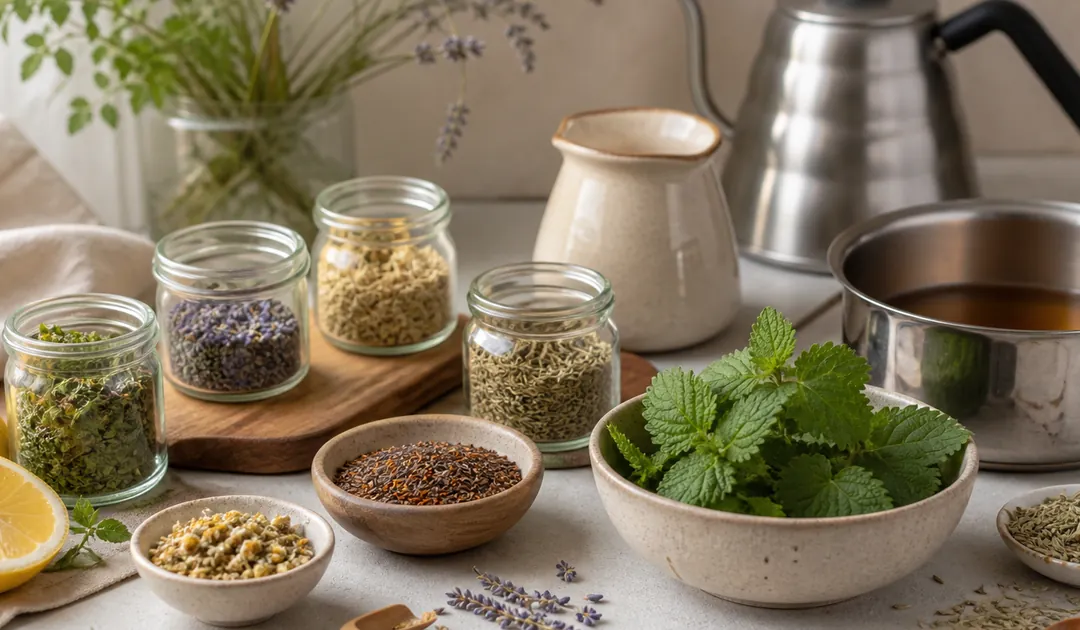
You want something warm to sip after dinner, but you don't want another cup of coffee or black tea. Maybe you like an aromatic herbal tea; maybe you'd rather have something mellow enough to drink without sugar. A good evening cup should fit your taste and your needs—not promise to put you to sleep.
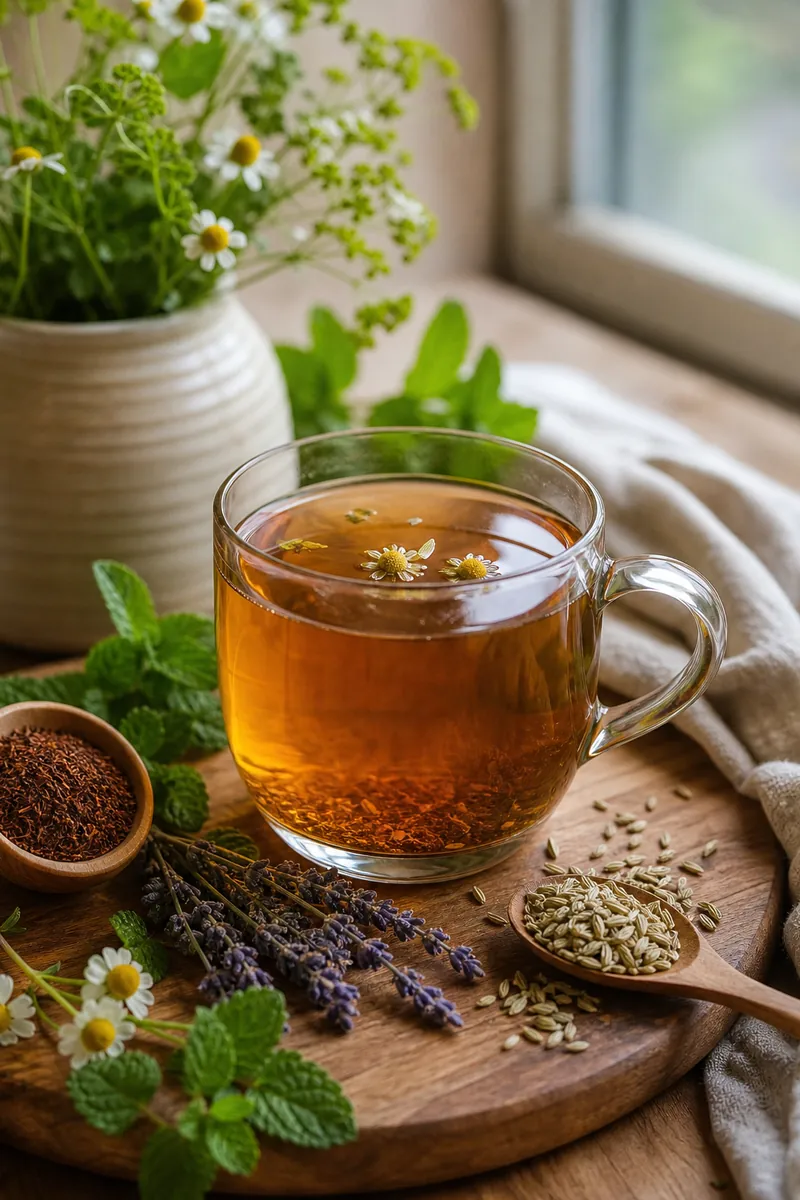
Plain rooibos, peppermint, chamomile, and ginger can all be brewed without caffeine-containing tea leaves. A simple fruit-and-spice infusion is another option. The important detail is plain: packaged blends may add true tea, mate, or other caffeine sources. And herbs have different safety considerations even when they contain no caffeine.
Below is a practical starting point for choosing a drink, reading the label, and making a cup that feels right for your evening.
Choose an Evening Drink by Flavor
| Drink | What to expect | A simple way to serve it | What to watch for |
|---|---|---|---|
| Plain red rooibos | Mellow, gently earthy or fruity | Brew as directed; serve plain or with a splash of milk | Flavored blends may contain other teas or botanicals |
| Peppermint leaf tea | Bright, minty, cooling on the palate | Steep a labeled tea bag or loose leaf as directed | Mint may be uncomfortable for some people prone to heartburn; avoid substituting peppermint oil |
| Chamomile tea | Floral, soft, sometimes apple-like | Start with a single-ingredient bag to learn the flavor | Ragweed/daisy-family allergy; possible medicine interactions; pregnancy safety uncertainty |
| Fresh ginger infusion | Warm, peppery, adjustable | Use a measured ginger-and-water recipe and strain the slices | Can be too sharp; ginger may cause heartburn or stomach discomfort in some people |
| Apple-and-cinnamon infusion | Fruity with a gentle spice aroma | Choose a labeled, caffeine-free fruit-and-spice tea or use familiar culinary ingredients | Check for added black tea, green tea, flavorings, or sweeteners |
These are flavor-based suggestions, not medically tested recommendations. The right choice may be plain rooibos, a different tea, or simply warm water if a particular herb is unsuitable for you.
Five Options Worth Knowing
1. Plain Rooibos for a Mellow Cup
Red rooibos is a South African herbal infusion known for its amber color and soft, slightly sweet-tasting character. Plain rooibos is naturally caffeine-free, unlike black or green tea. It is an easy first choice if you want a drink that tastes rounded rather than sharp.
Choose a single-ingredient rooibos tea bag or loose-leaf product and brew it according to the package. Drink it plain, add a small splash of oat milk for a creamier feel, or try a strip of orange peel for aroma. Those additions change the flavor, not the caffeine content—unless you use a sweetened or flavored product with other ingredients. Always check the blend.
2. Peppermint for a Fresh Finish
Peppermint tea offers a clean mint flavor that many people prefer after a rich meal. You don't need to sweeten it, and it can taste pleasant warm or chilled. Look for peppermint leaf tea intended for brewing, not peppermint essential oil or a concentrated supplement.
Follow the tea package's water and steeping directions; don't assume a longer steep is always better. If mint seems to bring on heartburn for you, choose something else. Research on peppermint oil and digestive symptoms cannot simply be applied to an ordinary mug of peppermint-leaf tea.
3. Chamomile When You Want Something Floral
Chamomile is popular in evening tea aisles, but its appeal here is its gentle floral flavor—not a promise to treat insomnia. There is very little good evidence that chamomile improves insomnia, and an individual tea bag is not the same as the products used in supplement research.
If you're considering chamomile, start by checking for an allergy to ragweed, daisies, chrysanthemums, or related plants. Chamomile can cause allergic reactions and may interact with some medicines, including warfarin and potentially sedatives. The safety of use during pregnancy or breastfeeding is not well established. If those concerns apply, select a different drink or seek professional advice first.
4. Ginger for a More Noticeable Bite
Ginger makes sense when you want a warm, peppery drink rather than a delicate herbal aroma. A simple ginger-and-water infusion lets you control the flavor by changing the amount of fresh ginger and steep time. Strain the slices instead of leaving them in the mug indefinitely.
The Warm Sip has a separate measured guide to making ginger tea without making it too strong, so this article doesn't need to repeat the full recipe. Keep in mind that ginger can contribute to heartburn or stomach discomfort in some people, and it is not an evening remedy for digestive or sleep problems.
5. Apple and Cinnamon for a Fruit-and-Spice Alternative
Not every caffeine-free evening cup needs to be made from a named medicinal herb. A fruit-and-spice infusion can provide aroma without adding tea leaves. A packaged apple-and-cinnamon fruit tea is convenient, as long as its ingredient list contains no caffeine source and no herbs that are unsuitable for you.
You can also make a simple culinary infusion using washed apple slices and a cinnamon stick heated in water, then strain it. This is a basic flavor idea, not a tested recipe with standardized amounts or health effects. Use ordinary food ingredients—not cinnamon essential oil or concentrated botanical drops. A little warm oat milk on its own is another option if you want something creamy instead of tea.
Caffeine-Free Is Not the Same as Decaffeinated
This is the most important shopping distinction on the page. Decaffeinated tea and coffee can still contain caffeine. FDA guidance notes that decaf products have less caffeine than regular versions but may retain some. If you specifically want zero added or naturally occurring caffeine sources, the word decaf is not enough.
The word herbal isn't a guarantee either. Most familiar botanical infusions contain no caffeine, but some plants commonly sold in tea-like blends do. Before buying an evening blend, check for:
- True tea leaves: black, green, white, oolong, matcha, or Camellia sinensis.
- Other caffeinated botanicals: yerba mate, guayusa, yaupon, guarana, or similar ingredients.
- Cacao or cocoa: chocolate-related ingredients naturally contain some caffeine; a chocolate-flavored evening drink may not be caffeine-free.
- Added caffeine or stimulating blends: read the full ingredient list and other product information, not just the words calming, night, or herbal on the front.
For single-ingredient rooibos, chamomile, peppermint, or ginger tea, checking the label is usually straightforward. For mixed blends, every ingredient matters.
How to Choose Without Collecting Dozens of Herbs
Choose the flavor first, then confirm what is in the bag. Plain rooibos is a mellow starting point. Peppermint tastes sharp and fresh but may not suit someone with reflux. Chamomile is floral and requires an allergy and medicine check. A mild ginger infusion has a peppery edge and may be uncomfortable with heartburn. A simple fruit-and-spice product offers another flavor, if its full ingredients are clear.
Three example ingredient lists to practice reading
These are fictional illustrations, not actual product labels or safety certifications:
| Label reads | Caffeine decision | Other decision |
|---|---|---|
| Red rooibos, orange peel | No intentional caffeine-bearing plant is listed. | Check instructions and your own ingredient tolerances. |
| Rooibos, green tea, cinnamon | Contains a caffeine source even though “rooibos” is first. | Do not assume the phrase evening blend means caffeine-free. |
| Chamomile, valerian, natural flavors | No conventional tea leaf is listed, but the full formula still needs review. | Additional herbs introduce separate cautions; a bedtime claim is not a safety clearance. |
A good evening drink doesn't require mixing five different herbs. If a specific ingredient is unsuitable for you, leave it out rather than chasing a weaker dose as a guarantee of safety.
A Two-Minute Label Check Before Brewing
Read the product's complete ingredients first: black, green and white tea, matcha, mate, guayusa, guarana, and cocoa can change the caffeine profile. Decaf is not the same as caffeine-free; FDA notes that decaffeinated coffee and tea products can retain caffeine.
Next, check the manufacturer’s preparation instructions and botanical warnings. A single-ingredient tea is easier to evaluate than a proprietary bedtime blend. If chamomile, another unfamiliar herb, medication use, pregnancy or allergies are a concern, consult an appropriate professional or choose a familiar alternative.
Finally, use a comfortable cup size. A late drink should suit your routine, not become an unnecessary fluid target. A warm cup can be enjoyable without claiming to treat insomnia.
Common Questions
Is caffeine-free the same as decaf tea?
No. Decaffeinated coffee and tea can retain some caffeine. A drink made from naturally caffeine-free ingredients and without caffeinated additives is different. Always check the actual ingredients.
Does rooibos contain caffeine?
Plain rooibos is naturally caffeine-free. Flavored or mixed rooibos products may include other plants or added ingredients, so check the package before assuming the entire blend is caffeine-free.
Will chamomile tea help me sleep?
Chamomile is commonly marketed for bedtime, but the available evidence does not establish that it treats insomnia. It also has allergy and medicine-interaction cautions. Choose it for its flavor only when it is appropriate for you.
Are herbal teas always caffeine-free?
No. Most familiar herbal teas are naturally caffeine-free, but some blends contain yerba mate, guayusa, cacao, true tea leaves, or added caffeine. Read the ingredient list rather than relying on the word “herbal.”
What if I want a caffeine-free drink without chamomile or tulsi?
Plain rooibos, a suitable peppermint-leaf tea, an ordinary ginger infusion, or a labeled fruit-and-spice tea are alternatives to consider based on your preferences and individual safety needs. Warm milk without coffee, tea, or cocoa is another option.
Sources and Further Reading
- FDA — Spilling the Beans: How Much Caffeine Is Too Much? — Difference between decaf and caffeine-free; coffee, true tea and cocoa as caffeine sources.
- NCCIH — Chamomile: Usefulness and Safety — Limited insomnia evidence, ragweed-family allergies, medicine interactions, and pregnancy data limits.
- NCCIH — Peppermint Oil: Usefulness and Safety — Distinguishing peppermint-leaf tea from essential oil; reflux and safety caveats.
- South African Rooibos Council — Frequently Asked Questions — Plain rooibos botanical identity, natural caffeine-free status, flavor and common preparation.
- NCCIH — Ginger: Usefulness and Safety — Ginger adverse effects, especially heartburn; caution about supplement studies.
- Merck Manual — Holy Basil — Why tulsi should not be treated as a universal evening-tea alternative.
- NIH — Healthy Sleep — Caffeine avoidance and reducing large drinks near bedtime as part of sleep habits.