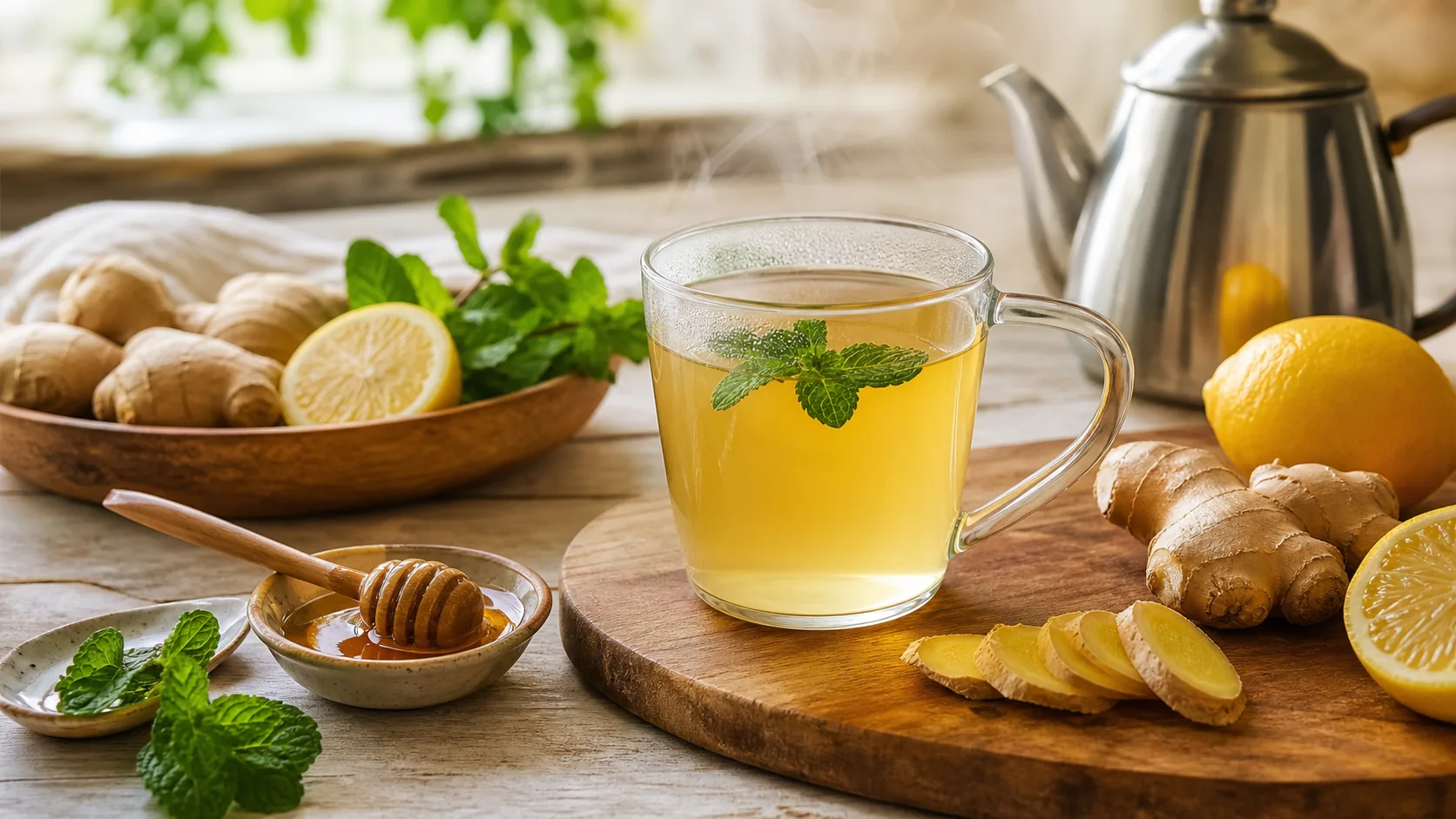
Fresh ginger gives this caffeine-free tea its gentle heat; lemon adds a clean, bright finish. You only need water, ginger, and lemon to make it, with honey and mint as optional additions. It's the kind of simple drink you can make in one small saucepan without tea bags, special powders, or complicated equipment.
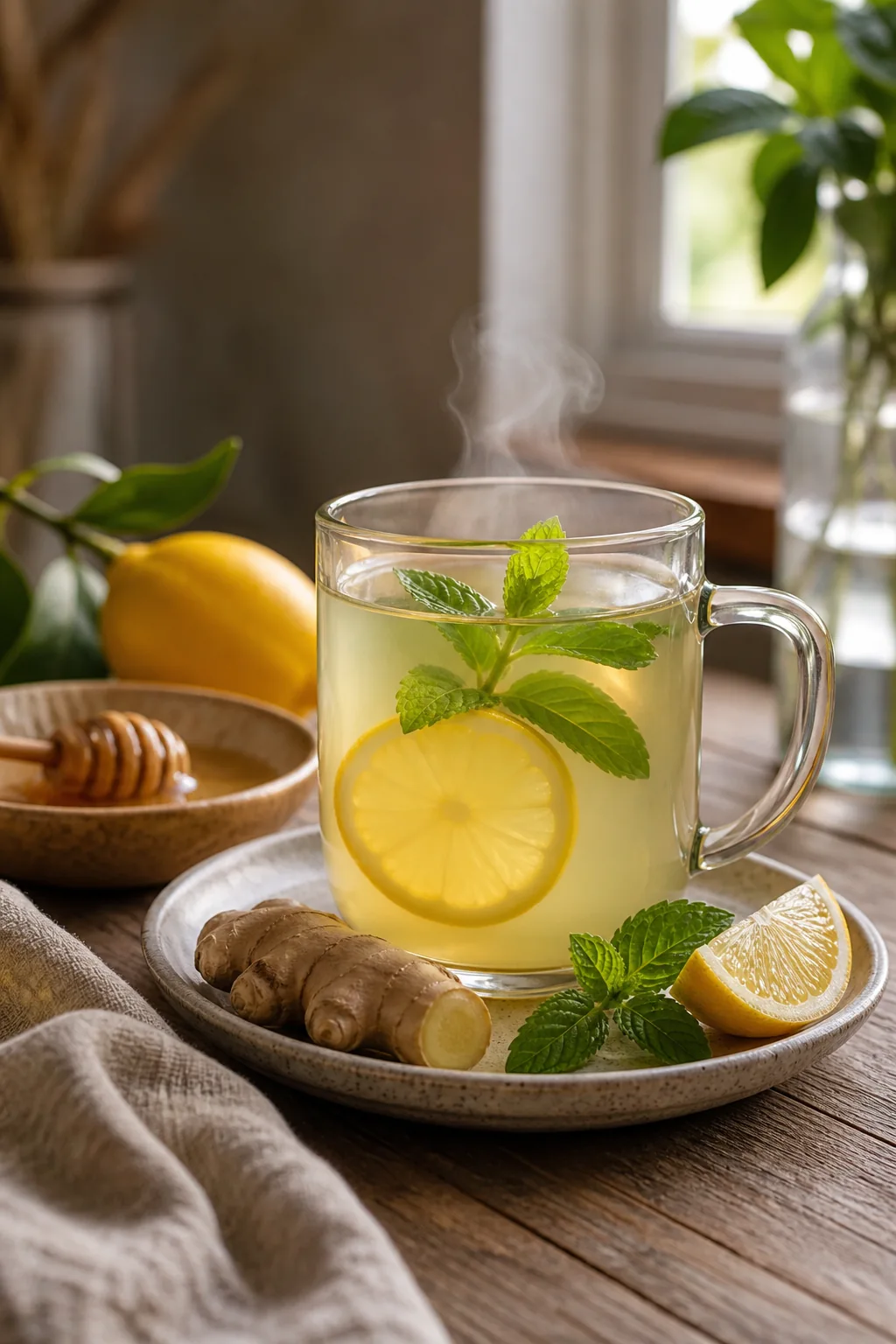
For a practical untested starting ratio, use about 10 g of fresh ginger and 1 tablespoon of lemon juice for one mug. Flavor will depend on the ginger and lemon you have. You can make the tea milder or sharper after tasting it, rather than guessing how much ginger to use.
At a glance: 3 minutes prep · approximately 10 minutes on the stove · 13 minutes total · 1 mug · naturally caffeine-free
Ginger Lemon Tea Recipe
This is a ginger-and-water simmer finished with fresh lemon. It aims for one generous mug with the citrus added only after straining; the finished volume and flavor still need checking in a real kitchen test.
Ingredients
- 1¼ cups (300 ml) water
- 10 g fresh ginger, weighed after trimming and cut into thin slices; a 1-inch piece is only a rough shopping guide
- 1 tablespoon (15 ml) fresh lemon juice, plus more to taste
- 1 teaspoon (5 ml) honey, optional
- 2 fresh mint leaves, optional
Equipment: a small saucepan, knife, strainer, and heat-safe mug.
Instructions
- Prepare the ginger. Rinse and scrub the ginger. Slice it thinly so more of its cut surface is exposed to the water. Peeling is optional if the skin is clean and sound.
- Simmer gently. Put the ginger and water in a small saucepan. Bring just to a boil, then turn the heat down. Simmer gently for about 7–8 minutes. Keep the pan partly covered if it is evaporating quickly.
- Strain. Remove the pan from the heat and pour the ginger water through a strainer into a heat-safe mug. Take care with the hot liquid.
- Add the lemon. Stir in 1 tablespoon of fresh lemon juice. Taste before adding more; lemon can quickly overpower the ginger.
- Finish to your liking. Stir in honey if you want a sweeter cup. Add mint leaves for a fresh aroma, let the drink cool to a comfortable temperature, and serve.
Before You Make Another Batch
The ginger concentration depends on both the starting water and the water lost during simmering. Check the actual liquid volume after straining before deciding whether the drink needs dilution; if the pan reduces more than expected, top up with a little hot water to your preferred mug size. This is a reproducibility tip, not a tested yield.
How to Adjust the Flavor
This recipe is meant to be flexible, but change one thing at a time so it's easy to see what you prefer.
- For less ginger heat: Start with 5 g of ginger instead of 10 g, or stop the simmer a few minutes earlier. Add a splash of hot water if the finished tea is already too strong.
- For more ginger flavor: Use a few additional slices or simmer a little longer. Taste in small increments rather than doubling the ginger immediately.
- For a brighter cup: Add lemon juice ½ teaspoon at a time after the initial tablespoon.
- For less sharpness: Use 2 teaspoons of lemon instead of a full tablespoon. Honey can soften the flavor, but you don't need to sweeten the drink.
- For a mint finish: Add the two mint leaves after straining. There's no need to simmer them with the ginger.
Fresh Ginger, Ground Ginger, or a Tea Bag?
Fresh ginger is the preferred choice here. Thin slices are easy to strain out, and you can adjust the ginger-to-water ratio without changing the rest of the recipe.
Ground ginger works differently: the powder tends to leave sediment and gives the drink a more spice-like taste. If ground ginger is all you have, choose a separate recipe written for the powdered spice rather than swapping by teaspoon here; the texture and flavor will differ.
Ginger tea bags vary in strength and may include other ingredients. Follow the package directions, then add lemon to taste; don't assume a tea bag equals 10 g of fresh ginger.
Can You Serve It Cold?
Yes. Prepare the ginger infusion as above, add the lemon, then transfer it to a clean covered container and refrigerate promptly. Once chilled, serve over ice. Add honey while the tea is still warm enough to dissolve it, or skip it for an unsweetened iced version.
Cold tea can taste less spicy than a steaming cup, so start with the same ginger amount and adjust the next batch if needed.
Make-Ahead and Storage
The flavor is best freshly made. If you're preparing it ahead, refrigerate in a clean, covered container at 40°F (4°C) or below, and aim to drink it within 24 hours for best flavor. Don't leave it on the counter for hours while it cools: refrigerate promptly and within two hours of preparation. The 24-hour recommendation is about quality, not an official maximum safe storage period.
For a warm serving later, reheat the amount you want until steaming, then check whether it needs another squeeze of lemon.
Recipe card
Ginger Lemon Herbal Tea
Ingredients
- 1¼ cups (300 ml) water
- About 10 g fresh ginger (roughly 1 inch/2.5 cm), cut into 6–8 thin slices
- 1 tablespoon (15 ml) fresh lemon juice, plus more to taste
- 1 teaspoon (5 ml) honey (optional)
- 2 fresh mint leaves (optional)
Method
- Rinse and scrub ginger, then slice thinly. Peeling is optional.
- Place ginger and water in a small saucepan. Bring just to a boil, then simmer gently for about 7–8 minutes.
- Remove from heat and strain ginger water into a heat-safe mug.
- Stir in 1 tablespoon fresh lemon juice. Taste and adjust gradually.
- Add optional honey and mint leaves. Allow the tea to cool to a comfortable drinking temperature and serve.
Common Questions
Do you need to peel the ginger?
Not necessarily. Scrub it well and trim away any damaged spots. Peeling can be useful when the skin is tough or you prefer a cleaner-looking infusion.
Does ginger lemon herbal tea contain caffeine?
No caffeine-containing tea leaves are used in this recipe. Ginger, lemon, water, and the optional additions listed here are naturally caffeine-free.
Can I use bottled lemon juice?
Yes, if that's what you have. Start with a smaller amount and taste before adding more, since bottled juice can have a different flavor from fresh lemon.
Is this the same as plain ginger tea?
Not quite. Plain ginger tea focuses on ginger and water; this recipe deliberately balances ginger's warmth with lemon's acidity. For a ginger-only preparation and more detailed strength adjustments, see our separate ginger-only guide when it is published.
Sources and Further Reading
- National Center for Complementary and Integrative Health: Ginger — evidence boundaries and potential adverse effects.
- FoodSafety.gov: 4 Steps to Food Safety — refrigeration and storage guidance.