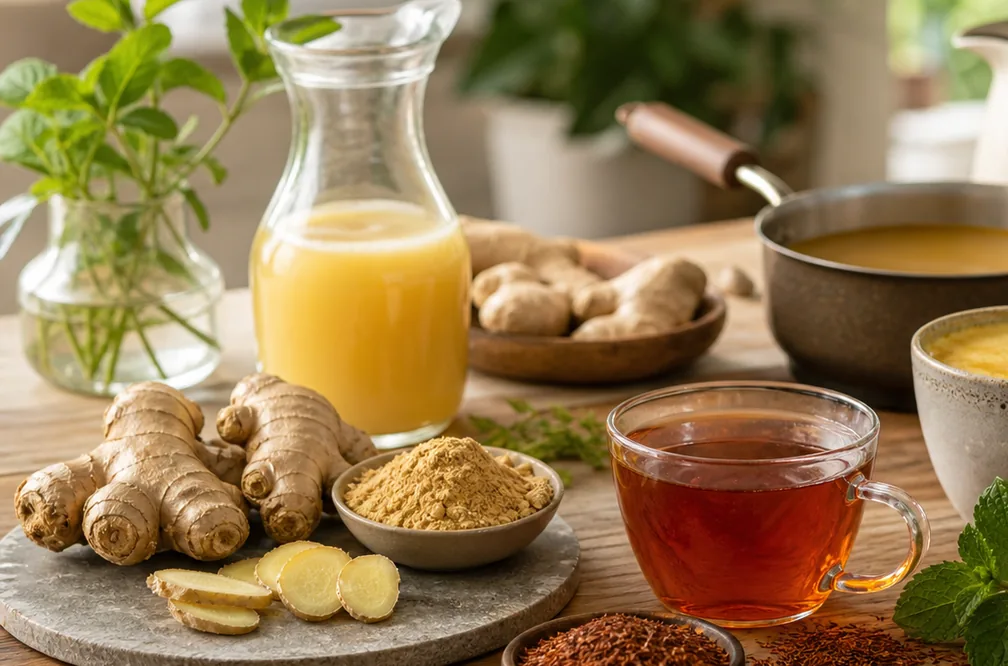
Fresh ginger has a bright, peppery bite that comes through clearly in a mug of hot water. Ground ginger brings a different kind of warmth to oat milk and spiced drinks. Bottled ginger juice, tea bags, and sweetened ginger syrups add more choices—but they aren't interchangeable by the spoonful.
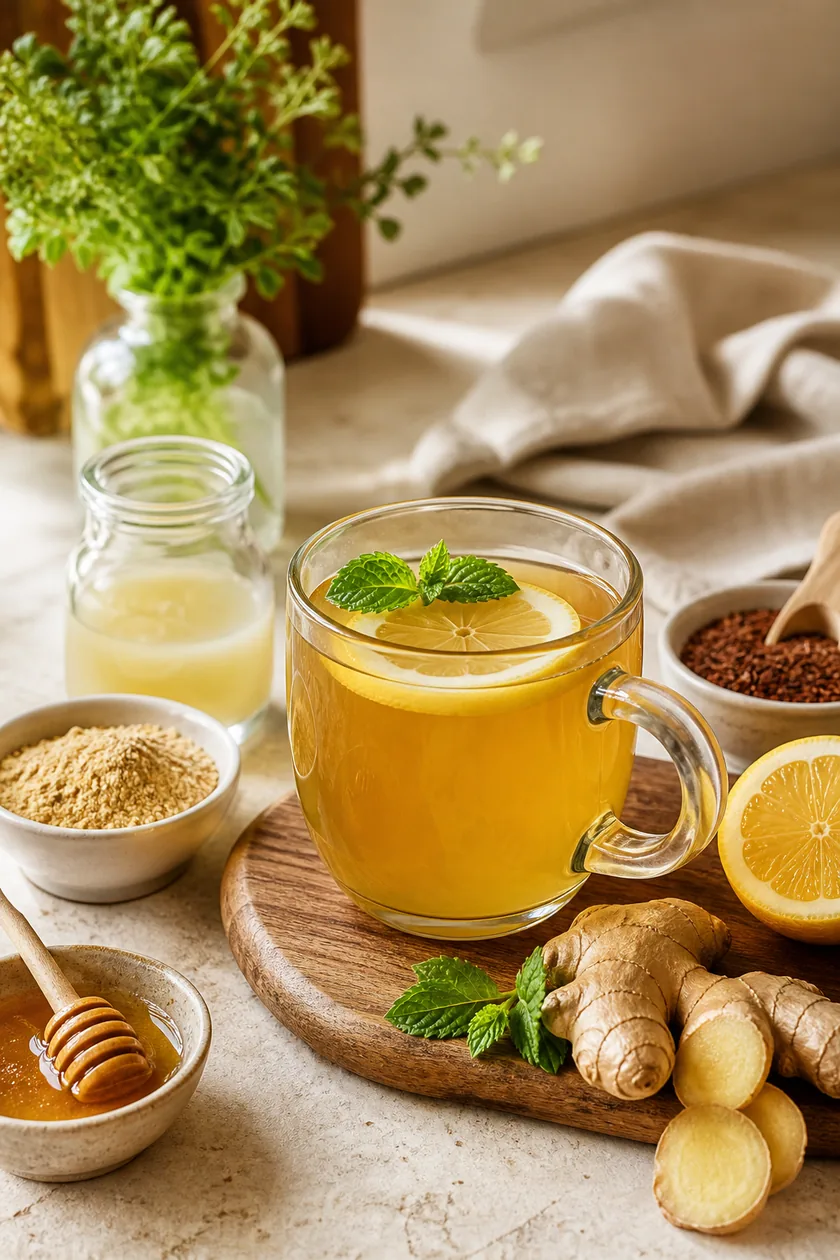
If you're choosing ginger for a drink, start with the flavor and texture you want, then pick the form that fits. This guide covers what each type is good for, how to handle it in an ordinary kitchen, and when a product label deserves a closer look. For measured quantities and steeping times, use a specific recipe rather than guessing from an ingredient guide.
Ginger sold for cooking generally comes from the rhizome—the underground stem—of Zingiber officinale. You may see it called “ginger root” in a grocery store, even though rhizome is the more precise botanical term.
Which Kind of Ginger Works Best in a Drink?
| Form | Typical flavor and texture | Best starting point | What to check |
|---|---|---|---|
| Fresh ginger, sliced | Bright, sharp, fragrant; pieces are easy to remove | Clear hot infusions or a brief stovetop simmer | Firm rhizome, clean skin, thickness of slices |
| Fresh ginger, grated | More immediate ginger bite; fibrous particles | A drink where you want a pronounced fresh-ginger taste | Straining method and how much pulp remains |
| Ground ginger spice | Warm, earthy, peppery; can leave sediment | Spiced oat milk, cocoa, and blended drinks | That it is plain culinary ground ginger, not an extract |
| Plain ginger tea bag | Depends on the blend and bag size | Convenient single-cup brewing | Actual ingredients, caffeine-containing additions, steeping directions |
| Bottled ginger juice or ginger shot | Can be very sharp, or sweetened and diluted | Recipes specifically calling for that product | Ingredient list, serving directions, refrigeration and processing instructions |
| Ginger syrup | Sweet, ginger-flavored; liquid mixes easily | A sweetened drink that already calls for syrup | Added sugar and other ingredients |
These are general kitchen expectations, not tested equivalences. A fresh slice, a teaspoon of dried powder, and a spoonful of ginger juice will not necessarily produce the same result.
Why Fresh and Ground Ginger Taste Different
Fresh ginger tends to taste lively and sharp, with a distinctive fresh aroma. Drying and grinding change both the aroma and the way ginger feels in a drink. Ground ginger often reads as warmer and more rounded in milk or spice blends, but the result depends on the product's age and freshness.
Think about the drink before choosing. If you want a clear tea with a clean finish, sliced fresh ginger is convenient because you can lift it out. If you want ginger to blend with cinnamon and vanilla in a creamy latte, a small amount of ground culinary ginger may be easier to work with—though some powder will settle.
Don't rely on a universal fresh-to-ground conversion. The two forms taste different, and a formula borrowed from baking may not suit a mug of tea. Begin with a recipe written for the form you have, then adjust for flavor once you've tried it.
Sliced, Grated, or Simmered: What Changes?
Choose slices when you want a clear drink. Washed, evenly cut pieces are easier to strain. Thin slices expose more surface than thick chunks, but you still need a recipe with a defined ginger amount and stop time.
Choose grated ginger when texture is acceptable. Grating creates fine pieces and a more immediate ginger taste. You may need a fine strainer, especially if the drink is water-based. A heaped spoon is not an accurate substitute for a measured weight.
Choose a simmer when the recipe calls for one. Simmering is a preparation method, not proof of superior flavor or health effect. For a mild, ginger-only cup the site's How to Make Ginger Tea Without Making It Too Strong guide uses an off-heat steep; Ginger Lemon Herbal Tea uses a short simmer to build a citrus-and-ginger flavor. Both remain untested recipe drafts until kitchen review.
Quick decision: clear and strainable → slices; bold taste with pulp → grated; creamy spice drink → ordinary ground ginger; fastest labeled option → a plain tea bag. Always verify product ingredients and preparation directions.
Using Ground Ginger Without a Dusty Cup
When you add ground ginger straight into a full mug of hot milk, it can clump or collect at the bottom. Try mixing the recipe's measured spice with a spoonful of cool liquid first, then gradually whisk in the rest. This helps distribute the powder, but it won't make every particle dissolve.
Ground ginger is especially useful in drinks with other warm spices, such as cinnamon or cardamom, and in milk-based preparations where a little sediment is acceptable. Keep it in a tightly closed container away from moisture, heat, and direct sunlight. If its aroma has faded noticeably, the flavor may be disappointing even if the jar looks fine.
If your powder says ginger extract, standardized, or dietary supplement, don't treat it as the kitchen spice in a drink recipe. A concentrated product may have different ingredients, directions, and safety considerations.
What About Ginger Juice, Tea Bags, and Syrups?
Plain ginger tea bags are convenient, but a bag may contain pieces of ginger, dried flavorings, or a blend with other herbs. Follow the label's brewing instructions. Some blends add black or green tea, so a package labeled “ginger tea” isn't necessarily caffeine-free.
Ginger juice and ginger shots vary even more. A bottle might contain mostly ginger juice, a mixture with apple or lemon juice, added sweeteners, or a concentrated preparation. Check whether the product needs refrigeration and follow its storage and use directions. Don't assume a tablespoon of one brand is equivalent to a tablespoon of another.
Ginger syrup is useful when sweetness is already part of the drink. Remember that its role is different from raw ginger: you are adding both ginger flavor and sweetener. Read the ingredient list if you want to avoid extra sugars or other flavorings.
Concentrated supplement extracts, tinctures, and essential oils are not casual replacements for any of these food ingredients.
Simple Flavor Pairings for Everyday Drinks
Here are ways to think about ginger as an ingredient, rather than four more full recipes:
- Ginger + lemon: A bright, sharp combination; use fresh ginger when you want to strain out the pieces and adjust the lemon separately.
- Ginger + cinnamon + oat milk: A warmer, creamier direction where ground culinary ginger can sit comfortably beside other dry spices.
- Ginger + mint: A fresh aromatic contrast. Add mint for flavor, not for a promised digestive or therapeutic effect.
- Ginger + rooibos: A tea-style pairing with a fuller herbal base; check the rooibos blend for any added ingredients.
- Ginger + apple: A fruit-forward direction for chilled drinks; check bottled juice ingredients if you don't want additional sweetness.
These are flavor ideas, not professionally taste-tested combinations or standardized formulations. Choose a measured recipe whenever you want repeatable results.
Buying and Keeping Fresh Ginger
Look for firm ginger with relatively smooth skin and a clean, spicy aroma. Avoid pieces that are shriveled, cracked, soft, or moldy. University of Minnesota Extension recommends wrapping fresh ginger and refrigerating it; it gives two to three weeks as a general storage reference. That is not a guarantee for a particular root, so inspect it before use.
Wash ginger under running water before cutting, even if you plan to peel. A spoon can scrape the grooves if peeling is needed. For a strained infusion, sound, well-washed skin does not always have to be removed. Discard damaged or rotten material.
For ground ginger, use a dry spoon and a tightly closed jar away from moisture and heat. If its smell has faded, replacing the spice may improve the drink more than increasing the quantity. Finished ginger drinks have their own storage rules; do not give a prepared tea the shelf life of an uncut rhizome.
Does Ginger Have Caffeine or Proven Health Effects?
Ginger itself isn't a caffeine-containing tea leaf. A drink made only from ginger and water has no intentionally added caffeine, but a ginger blend can contain black tea, green tea, or another source of caffeine. Always inspect the full label.
Ginger has also been studied for health-related uses, particularly nausea. However, the U.S. National Center for Complementary and Integrative Health notes that most ginger research has studied supplements rather than foods. Findings about a studied supplement do not establish what a cup of ginger tea will do, or how much of any product a person should take.
For The Warm Sip, ginger's dependable role is as a flavorful culinary ingredient. Enjoy the taste and the warmth of the drink without turning it into a treatment claim.
Common Questions
Can I replace fresh ginger with ground ginger in a tea?
Not with a reliable one-to-one conversion for flavor or exposure. Ground ginger has a different taste and can leave sediment. Use a recipe written for the form you have, and adjust for flavor rather than treating the measures as equivalent.
Do I have to peel ginger before making a drink?
Not always. Wash and scrub the ginger under running water before cutting it. If the skin is clean and sound, you can leave it on for a strained infusion; peel if you prefer or if the skin is tough.
Does ginger tea contain caffeine?
Plain ginger and water contain no caffeine-containing tea leaves. Commercial ginger blends may include black tea, green tea, or other ingredients, so check the package.
Why does ground ginger settle at the bottom of my drink?
Ground ginger consists of fine plant particles that do not fully dissolve in water or milk. Mixing it into a small amount of cool liquid first and whisking before drinking can improve texture, but some sediment is normal.
Are ginger shots or ginger extracts the same as fresh ginger?
No. Bottled shots and juices differ in ingredients, concentration, processing, and serving directions, while supplement extracts may be more concentrated. Read the product label instead of guessing a substitution.
Sources and Further Reading
- University of Minnesota Extension — Ginger — Selecting, preparing, washing and storing fresh ginger.
- Serious Eats — Ground Ginger: How It Differs From Fresh — Culinary differences in fresh and dried ground ginger flavor and use.
- U.S. FDA — Selecting and Serving Produce Safely — Washing produce under running water before peeling or cutting and discarding spoilage.
- NIH NCCIH — Ginger: Usefulness and Safety — Cautions about health claims, supplement evidence, adverse effects and medications.
- U.S. FDA — FDA 101: Dietary Supplements — The difference between supplement products and ordinary culinary food ingredients.