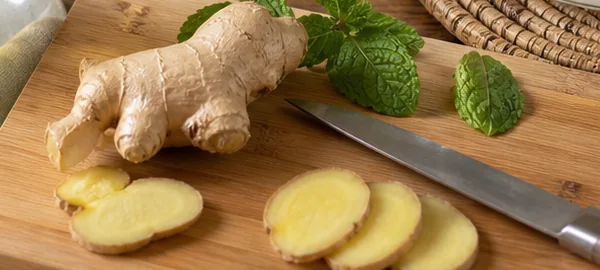
Ginger tea doesn't have to make your throat tingle. If your last cup tasted fiery, the fix is usually simpler than adding more honey: use a measured amount of ginger, steep it for a set time, and remove the slices before the flavor gets too intense.
This recipe uses only fresh ginger and water. Instead of simmering the root on the stove, you'll pour freshly boiled water over thin slices and let them steep off the heat. The result is intended to be a lighter ginger tea with a clear stopping point. Fresh ginger varies in strength, and the quantities and steeping times in this draft have not yet been kitchen-tested. Use them as working estimates, not verified strength settings.
At a glance (estimated): 3 minutes prep and kettle heating may overlap · 6 minutes steeping · approximately 9 minutes total · 1 mug · naturally caffeine-free. Actual kettle timing must be checked.
Mild Fresh Ginger Tea Recipe
Makes: 1 generous mug (from 1¼ cups / 300 ml water)
Equipment: kettle, kitchen scale (helpful), knife, cutting board, covered heat-safe mug or teapot, and strainer
Ingredients
- 1¼ cups (300 ml) water
- 8 g fresh ginger, washed and cut into roughly 2–3 mm thick slices
That's the whole base recipe. Lemon, honey, mint, and tea bags aren't needed to control the ginger flavor.
Instructions
- Heat the water. Bring 300 ml water to a boil in a kettle. While it heats, wash and scrub the ginger under running water and trim away any damaged spots.
- Slice, don't grate. Cut about 8 g of ginger into thin, fairly even rounds, roughly 2–3 mm thick. A scale is more reliable than counting slices because ginger roots vary in diameter. Leave the peel on if it's clean and sound, or peel if you prefer.
- Steep off the heat. Put the ginger into a tea infuser or heat-safe mug. Pour over the freshly boiled water, cover, and steep for 6 minutes. You do not need to keep the water simmering.
- Remove and taste. Take out the infuser or strain the tea into a second mug as soon as the time is up. Let it cool to a comfortable sipping temperature, then taste. If you prefer it lighter, add a little more hot water.
Find Your Ginger Tea Strength
These three combinations are useful editorial starting points, not taste-tested or medically defined strengths. Keep the water at 300 ml and use sliced—not grated—fresh ginger so you can compare results.
| If you want... | Fresh ginger | Covered steep time |
|---|---|---|
| A very gentle cup | 5 g | 5 minutes |
| A mild but noticeable ginger flavor | 8 g | 6 minutes |
| A more pronounced ginger bite | 10 g | 8 minutes |
Try the middle option first. On a later cup, adjust just one variable—either the amount of ginger or the time—so you can tell what made the difference. These are untested starting points, not reliable strength predictions; check real results before publishing them as recommendations.
What the Three Strength Settings Can—and Cannot—Tell You
A 5 g / 5-minute cup, an 8 g / 6-minute cup, and a 10 g / 8-minute cup vary both ginger quantity and time, so this table is a convenient range of test candidates, not a controlled experiment proving which factor causes a different taste. For a repeatable comparison, first hold water and steep time constant while changing ginger weight; then hold ginger weight constant while changing time. Use a kitchen scale and record the actual finished volume.
Why Ginger Tea Sometimes Tastes Too Hot
Too much ginger for the mug. A large chunk in a small cup creates a stronger drink than the same amount in a full teapot. Measuring by weight makes recipes easier to repeat.
Extra-fine pieces. Grated, crushed, or very finely chopped ginger exposes much more cut surface than a few neat slices. It can release flavor quickly and leave tiny pieces that are harder to strain.
A long simmer—or forgotten slices. Simmering and steeping are both legitimate methods, but leaving ginger in hot water while you drink can keep changing the flavor. This off-heat method gives you a clearer stopping point.
The ginger itself. Freshness, variety, and root size change the flavor. If one batch seems unusually sharp, use a smaller portion next time instead of assuming the recipe has to taste identical every time.
What to Do If Your Tea Is Already Too Strong
- Remove the ginger immediately. Don't try to rescue the cup while the slices are still steeping.
- Dilute in small steps. Add ¼ cup (60 ml) hot water, stir, and taste when comfortable. Add another ¼ cup if needed. You can split one overly strong batch between two mugs rather than making it unnecessarily sweet.
- Change the next batch. Try 5 g ginger with a five-minute steep. Reducing both strength factors offers a gentler starting point, and you can increase one of them later.
Honey can make the drink taste sweeter, but it doesn't actually remove the ginger. Dilution is the more predictable first step.
A Few Small Details That Help
You don't have to peel clean fresh ginger, but wash it well and trim any questionable parts. If the root feels soft or shows mold, discard it. For the most consistent brew, keep the slices similar in thickness rather than mixing paper-thin shavings with thick chunks.
Making it ahead? Fresh is simplest. If you're saving some for later, refrigerate promptly in a clean, covered container at 40°F (4°C) or below, within two hours of preparation. Aim to drink it the next day for the best flavor; that is a quality preference rather than an official maximum safe-storage limit. Reheat only the portion you want.
This is deliberately a plain ginger tea guide. A drink made with lemon has an additional citrus flavor to balance, so our separate Ginger Lemon Herbal Tea recipe is designed around different proportions and a brief simmer rather than this short steep.
Recipe card
Mild Fresh Ginger Tea
Ingredients
- 1¼ cups (300 ml) water
- 8 g fresh ginger, scrubbed and sliced roughly 2–3 mm thick
Method
- Bring 300 ml water to a boil in a kettle. While it heats, wash and scrub the ginger under running water and trim away any damaged spots.
- Cut about 8 g ginger into thin, fairly even rounds roughly 2–3 mm thick. Leave the peel on if clean and sound, or peel if preferred.
- Put the ginger in an infuser or heat-safe mug, pour over the freshly boiled water, cover, and steep for six minutes without simmering.
- Remove the infuser or strain the tea immediately into a second mug. Allow to cool to a comfortable sipping temperature, taste, and dilute with additional hot water if needed.
Common Questions
Do I need to peel ginger for tea?
No, not if the root is sound and you scrub it well under running water. Peel it if the skin is particularly tough or you prefer the look of peeled slices.
Can I use grated ginger instead of slices?
You can, but it may make the drink seem stronger and leaves fine particles in the cup. For this milder recipe, start with slices so you can remove them cleanly after six minutes.
Why is my ginger tea still too spicy after a short steep?
Ginger varies. Remove the slices, add hot water a little at a time, and try less ginger in your next mug. The suggested grams and times are starting points, not a guarantee of identical flavor.
Does homemade ginger tea contain caffeine?
The plain ginger-and-water recipe here contains no tea leaves or other caffeine-containing ingredients. Check packaged ginger tea blends separately.
Sources and Further Reading
- Oregon State University Extension — Garden Herbal Tea — General guidance on hot-water steeping, straining, and adjusting infusion amounts and time; not verification of the custom 8 g / 6-minute draft.
- University of Minnesota Extension — Ginger — Selecting, cleaning, slicing, and culinary uses of fresh ginger.
- NCCIH — Ginger: Usefulness and Safety — Distinguishing supplement studies from a beverage and checking reported adverse effects.
- FoodSafety.gov — 4 Steps to Food Safety — Timely refrigeration and refrigerator temperature guidance.