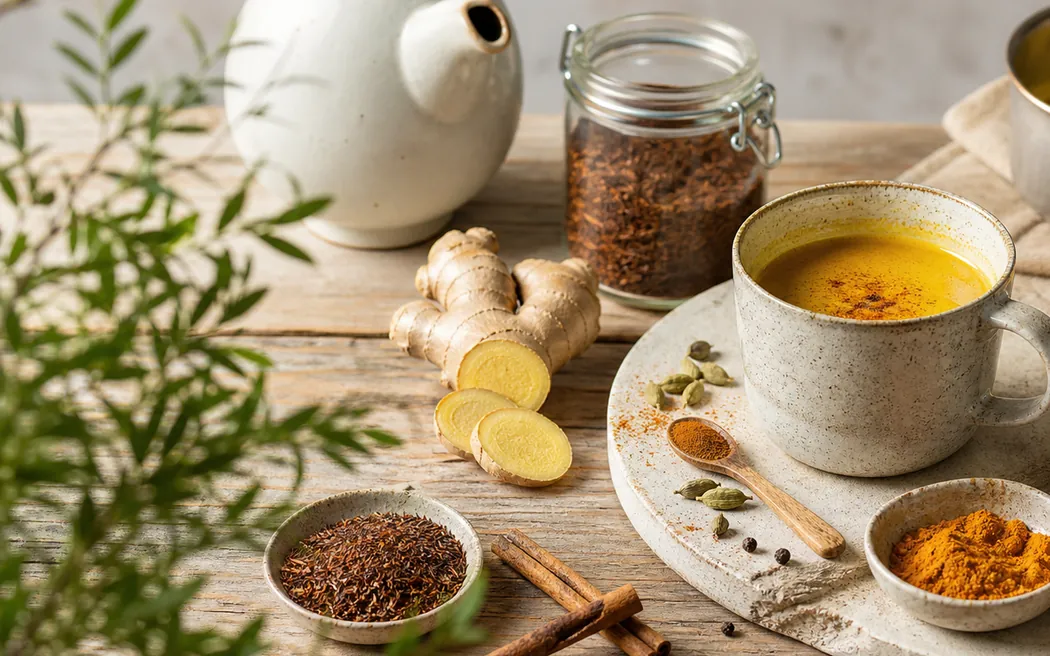
When it's cold outside, a mug of something fragrant can make an ordinary afternoon feel a little more inviting. You might want the clean, spicy bite of ginger; a creamy drink with cinnamon; or a lighter herbal infusion that doesn't taste like dessert. The best cold-day drink is the one that fits your appetite, your pantry, and the time you have.
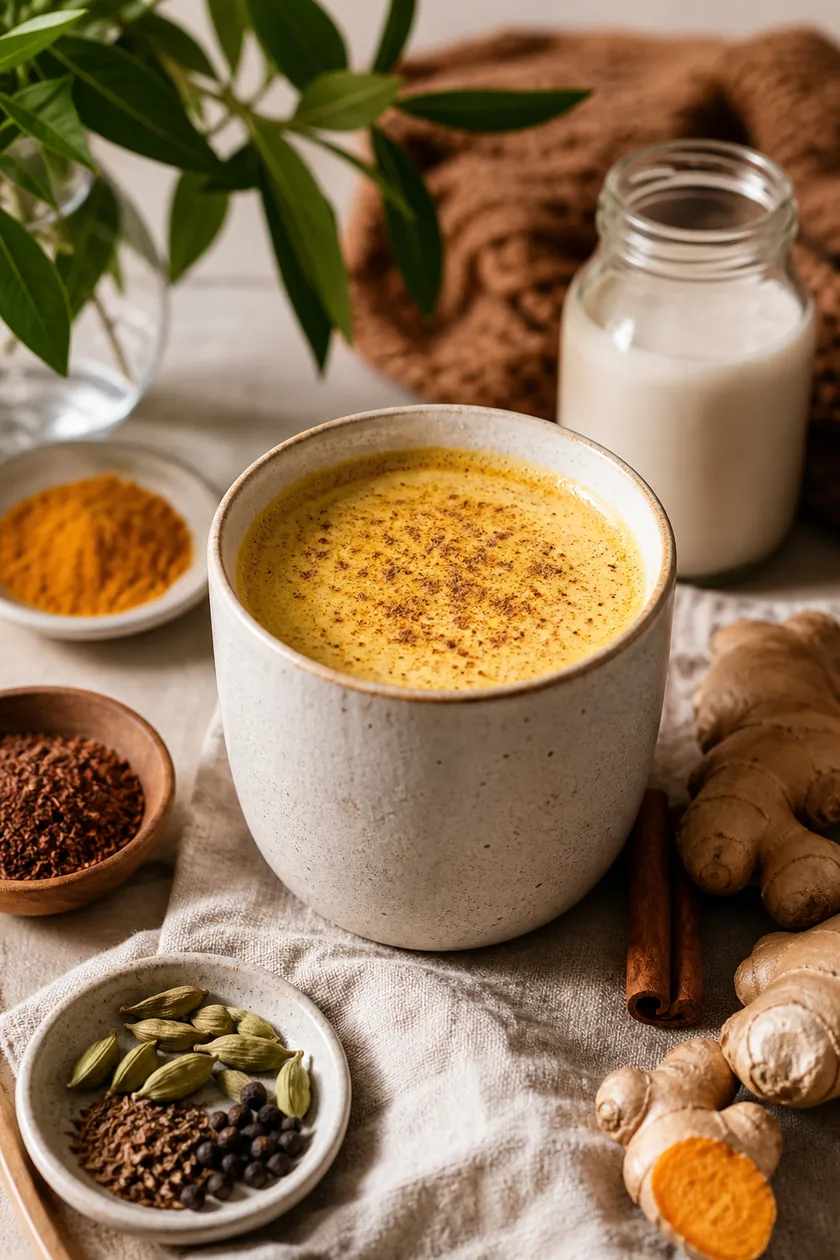
You don't need an expensive “winter wellness” powder or a cabinet full of unfamiliar herbs. Everyday ingredients such as rooibos, ginger, cinnamon, cardamom, oat milk, and apple cider offer plenty of options. This guide helps you choose a flavor, make it without unnecessary fuss, and avoid the common mistakes that leave a hot drink bitter, grainy, or far too sweet.
These are serving ideas, not laboratory-tested recipes or remedies for cold weather illnesses. Where a finished, measured recipe exists, we'll point you to it.
Pick a Warming Drink by Flavor, Not a Health Claim
| If you're in the mood for… | Try | Flavor and texture | Practical starting point |
|---|---|---|---|
| Light and aromatic | Spiced red rooibos | Mellow, amber, gently fruity | A plain rooibos tea bag with optional orange peel and a cinnamon stick |
| Fresh and peppery | Ginger and apple infusion | Bright ginger with a soft fruit note | A measured fresh-ginger steep with a few washed apple slices |
| Creamy and earthy | Golden turmeric oat milk | Golden, lightly spiced, full-bodied | Follow our one-mug Golden Milk recipe |
| Creamy but not strongly spiced | Vanilla-cardamom warm milk | Mild, fragrant, smooth | Warm plain milk or oat milk gently with a little vanilla and culinary cardamom |
| Fruity and familiar | Warm cinnamon apple cider | Sweet-tart apple with a cinnamon aroma | Heat pasteurized cider with a cinnamon stick; add no sugar until tasting |
Plain rooibos, ginger with water, the specified golden milk, and vanilla-cardamom milk have no intentional caffeine source. Apple cider is also normally caffeine-free when it contains only apple juice or cider and spices. Check packaged blends and flavorings, which may contain black tea, green tea, cocoa, coffee, or added caffeine.
Five Cold-Weather Cups to Consider
If you have a tea bag and five minutes: spiced rooibos
Use plain red rooibos according to its package, with an optional washed strip of orange peel or a small cinnamon stick for fragrance. Remove the solids when brewing is done. The point is a hot, light cup with minimal cleanup—not a promise that the blend treats a cold. A flavored rooibos product may include other botanicals or tea leaves; check the label.
If you have fresh ginger: ginger-and-apple aroma
Make the site's measured ginger tea as its own recipe directs, and try adding a couple of washed apple slices during steeping for an optional fruit note. This is an untested variation, not a new standardized recipe. Remove the ginger on time. Ginger can cause heartburn in some people, so avoid it if it does not suit you.
If you want a creamy mug: golden turmeric oat milk
Use the separate Golden Turmeric Oat Milk recipe for measured amounts of oat milk, turmeric, cinnamon and ginger. A little cold milk whisked into the dry spices before heating can reduce clumps. The recipe remains a draft pending kitchen testing; do not replace kitchen turmeric with curcumin extract.
If your pantry has only milk and a spice jar: vanilla-cardamom milk
For a simple editorial flavor idea, gently heat a mugful of milk that suits you, add a small pinch of culinary cardamom, and optionally finish with vanilla. Taste before sweetening. Product behavior varies; this is not a tested Recipe Card. Use culinary spices, not essential oils.
If you have treated apple cider: warm cinnamon cider
Warm pasteurized or otherwise safety-treated cider gently with a short cinnamon stick and remove the spice before serving. The FDA warns that juice or cider not processed to destroy harmful bacteria may cause foodborne illness. Simply making the cider warm enough to sip is not validated pasteurization. Choose the product carefully before it reaches the saucepan.
Three Techniques That Make Warm Drinks Taste Better
Choose the right base. Hot water keeps ginger, rooibos, and citrus aromas clear. Milk softens the flavor of ground spices and creates a richer texture. Apple cider is already sweet and fruity, so it needs fewer additions than plain water. Pick the base first and build around it rather than putting every spice in the pantry into one pot.
Treat whole spices and powders differently. A cinnamon stick can steep in a tea or gently warmed cider and then be removed. Ground cinnamon and turmeric do not fully dissolve; make a paste with a little cool liquid and whisk before heating a milk drink. If the finished mug has fine sediment, stir it instead of repeatedly adding more sweetener.
Use heat deliberately. Bring water to the temperature specified for the tea, then steep and remove the solids. Warm milk over modest heat while stirring; don't let it scorch on the bottom of the pan. Let every hot drink cool to a safe sipping temperature. A winter mug should be pleasant to hold and drink, not a burn risk.
Keep a Cold-Day Drink Simple—and Not Too Sweet
Spice, aroma, creaminess, and sweetness do different jobs. You don't need all four turned up to maximum. If you like an aromatic drink, try rooibos with cinnamon before adding honey. If you prefer a creamy drink, choose unsweetened oat milk and taste after warming. If you're starting with cider, consider the fruit's sweetness before reaching for maple syrup.
Buying a premade “winter blend”? Read the full ingredients. Some mixes contain real black or green tea, cacao, sweetened powders, or concentrated botanical extracts. Decaffeinated coffee or tea may still contain caffeine; the FDA distinguishes decaf from caffeine-free. The phrase warming herbs on packaging tells you very little about the specific ingredients or their suitability for you.
You can prepare the ingredients ahead—wash fruit, measure ordinary kitchen spices, and set out clean mugs—without brewing a giant batch. Milk-based drinks and cider are best made in amounts you can serve or chill promptly. Refrigerate perishable leftovers within two hours at 40°F (4°C) or below, and follow individual product storage directions.
The Comfort Is in the Cup, Not a Cure
The quick cold-day setup
Keep a kettle or small saucepan, a strainer, one favorite mug, and a few familiar ingredients handy. If you want a clean tea, use water and a labeled infusion. For a creamy drink, warm milk slowly and whisk any ground spice into a small amount of cool liquid first. For cider, begin with a properly treated product.
This setup is more useful than stocking numerous concentrated “winter wellness” powders. The warmth is the drinking experience. Neither a steaming mug nor a dramatic spice color establishes protection against colds, improved circulation, or a health treatment.
Common Questions
Which warming drink is caffeine-free?
Plain rooibos, ginger and water, the specified golden oat milk, vanilla-cardamom milk, and ordinary apple cider without added caffeinated ingredients are caffeine-free choices. Check packaged blends for tea, cocoa, coffee, mate, or added caffeine.
Do I have to use milk for a comforting winter drink?
No. Rooibos, ginger infusions, and warm apple cider are water- or fruit-based. Choose a drink based on the texture and flavor you actually like.
Can I use ground spices instead of whole spices?
Sometimes, but the texture changes. Ground cinnamon or cardamom can leave sediment, while whole sticks or pods can often be removed after steeping. Use recipe-specific quantities rather than assuming the same spoonfuls are equivalent.
Can I make warm apple cider from unpasteurized cider?
For a simple warming drink, choose pasteurized or otherwise safely treated cider. The FDA warns that untreated juice may carry harmful bacteria; merely warming it for serving is not a validated safety treatment.
What is the simplest warm drink if I have only a kettle?
Use a clearly labeled plain rooibos tea bag, following its brewing directions. Add a small cinnamon stick or washed orange peel only if you want extra flavor.
Sources and Further Reading
- South African Rooibos Council — Rooibos Is More Than Just a Drink — Rooibos as naturally caffeine-free infusion and basic brewing method.
- NCCIH — Ginger: Usefulness and Safety — Culinary vs studied supplement evidence and possible heartburn or gastrointestinal effects.
- NCCIH — Turmeric: Usefulness and Safety — Differences between culinary turmeric and concentrated curcumin formulations, including safety warnings.
- FDA — Spilling the Beans: How Much Caffeine Is Too Much? — Caffeine from tea, cocoa and other sources, and distinction between decaffeinated and caffeine-free.
- FDA — What You Need to Know About Juice Safety — Untreated cider and juice safety, and consumer selection of treated products.
- FoodSafety.gov — 4 Steps to Food Safety — Refrigeration of perishable beverages within two hours at or below 40°F (4°C).