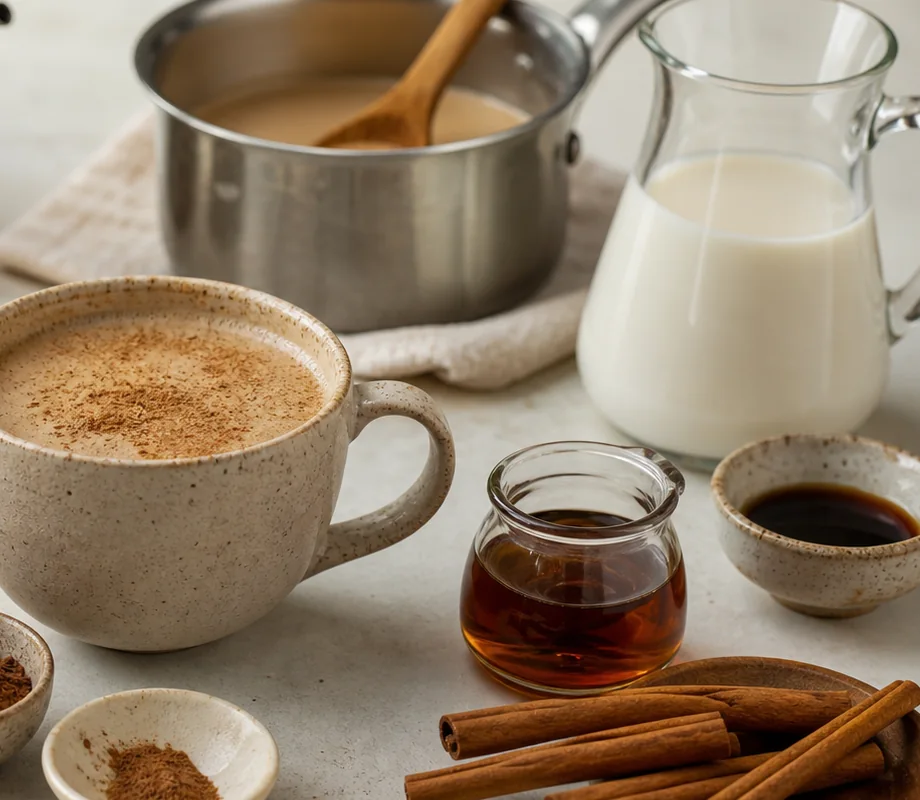
You don't need espresso to make a latte-style morning drink. This maca cinnamon version combines unsweetened oat milk, a little plain maca root powder, cinnamon, and vanilla in one small saucepan. The intended flavor is mellow and spiced, with an earthy, malty note from plain maca powder; the exact outcome depends on the actual product and has not been kitchen-tested. A touch of maple syrup is optional.

The main recipe contains no coffee, brewed tea, or cacao. If you'd rather have a chocolate flavor, there is a simple cocoa variation below. This is a drink recipe, not an energy booster or hormone-balancing formula.
At a glance: 2 minutes prep · about 5 minutes heating · 7 minutes total · 1 mug
Maca Cinnamon Latte Recipe
Makes: 1 mug (made with 1 cup / 240 ml oat milk)
Equipment: small saucepan, whisk, measuring spoons, and heat-safe mug; handheld frother optional
Ingredients
- 1 cup (240 ml) unsweetened plain oat milk
- ½ teaspoon plain maca root powder, sold for use in drinks or food; not an extract or blended supplement
- ¼ teaspoon ground cinnamon
- ¼ teaspoon vanilla extract
- 1 teaspoon maple syrup, optional, to taste
- A light dusting of cinnamon to finish, optional
Use only a plain maca product explicitly labeled for use in food or drinks, and follow any cooking or preparation instructions on that specific package. Do not substitute extracts, capsules, or supplement blends. The ½-teaspoon quantity is an untested recipe starting point for flavor, not a dose or guidance for daily supplementation. The exact manufacturer and label still need to be recorded before publication.
Instructions
- Make a smooth base. Put the maca powder and cinnamon into a small, unheated saucepan. Add about 2 tablespoons of the cold oat milk and whisk into a thin, smooth paste. This helps prevent dry lumps.
- Add the milk. Gradually whisk in the remaining oat milk until the spices are dispersed. Stir in the vanilla.
- Warm, don't boil. Set the saucepan over medium-low heat. Whisk often for about 4–5 minutes, until the milk is steaming and warmed through. Reduce the heat if it begins bubbling vigorously or sticking to the pan.
- Taste and finish. Remove from the heat and taste. Add maple syrup if you'd like more sweetness. Whisk once more, or carefully froth the warm drink off the heat, then pour into a mug. Add a small dusting of cinnamon if you wish.
Oat milks vary in thickness, so the final texture may be lighter or creamier depending on the brand.
Why the Actual Maca Package Matters
Some products are sold as regular milled powder, others as gelatinized maca or extracts. A label may specify preparation methods that differ from this saucepan recipe. For a responsible kitchen test, document the exact package name, ingredient panel, recommended use and any warnings; if its directions do not allow this preparation, do not use the product in this recipe. A general teaspoon conversion cannot establish a safe amount for a concentrated extract.
How to Keep the Latte Smooth
The most useful technique is to mix the dry powders with cold milk first. If you dump maca and cinnamon into a full pan of hot oat milk, they can form small clumps that are harder to break up. A whisk usually does the job; a frother is helpful only if you want extra foam.
Maca and cinnamon will not dissolve completely like sugar. A little fine sediment is normal, particularly as the drink cools. Stir the mug before the final few sips instead of adding more syrup to disguise the texture.
If the latte tastes too earthy, add a splash of oat milk or try ¼ teaspoon maca in your next cup. If it tastes flat, a little more cinnamon or vanilla may help before you add sweetener. Change one ingredient at a time so you can find a combination you actually like.
Chocolate Variation: Maca Cacao Latte
To make the chocolate version from the original recipe, add 1 teaspoon unsweetened cocoa or cacao powder to the saucepan with the maca and cinnamon. Make the same cold-milk paste, then follow the heating instructions above. Taste before adding maple syrup: cocoa can make the drink more bitter, depending on the product.
This is a variation, not a separate recipe page. Cocoa and cacao can contain naturally occurring caffeine, so don't describe this chocolate version as caffeine-free. If you prefer to avoid caffeine altogether, make the plain cinnamon version and check the labels of any ready-made blends.
Choosing a Maca Powder
For this recipe, look for plain maca root powder that the manufacturer labels for use in food or drinks. You may see both regular and gelatinized maca powders on shelves. They can vary in processing, texture, and flavor; follow the preparation and serving instructions for the particular product rather than assuming all powders behave the same way.
Do not substitute a concentrated maca extract, capsules, or an unspecified “adaptogen blend” for the plain powder in the ingredient list. Those products may contain other ingredients or have different directions. If you're uncertain about a supplement label, ask a qualified healthcare professional or pharmacist before using it.
Can You Make It Iced?
Yes. Whisk and gently heat the latte first to distribute the powders, then cool it promptly and refrigerate in a clean, covered container. Shake or stir well once chilled, and pour over ice. The spices may settle more readily in a cold drink, so you may want a straw or spoon for an occasional stir.
Storage and Reheating
This latte is nicest fresh. If you make extra, refrigerate it within 2 hours in a clean, covered container at 40°F (4°C) or below. Aim to drink it by the next day for the best flavor and texture; that is a quality preference, not an official maximum safe-storage limit.
Warm leftovers gently in a small pan, whisking as you go. Follow the storage directions on your oat milk carton, too.
Recipe card
Maca Cinnamon Morning Latte
Ingredients
- 1 cup (240 ml) unsweetened plain oat milk
- 1/2 teaspoon plain maca root powder labeled for use in food or drinks (not extract)
- 1/4 teaspoon ground cinnamon
- 1/4 teaspoon vanilla extract
- 1 teaspoon maple syrup, optional, to taste
- A small dusting of cinnamon, optional, to finish
Method
- Put the maca powder and cinnamon into a small, unheated saucepan. Add about 2 tablespoons of the cold oat milk and whisk into a thin, smooth paste.
- Gradually whisk in the remaining oat milk until the spices are dispersed. Stir in the vanilla.
- Set the saucepan over medium-low heat. Whisk often for about 4–5 minutes, until the milk is steaming and warmed through. Reduce the heat if it begins bubbling vigorously or sticking.
- Remove from the heat and taste. Add maple syrup if desired. Whisk again or froth carefully off the heat, pour into a mug, and dust with cinnamon if you wish.
Common Questions
Is maca cinnamon latte caffeine-free?
The plain version has no coffee, tea leaves, cacao, or other intentional caffeine source, provided your oat milk and maca powder are unflavored and contain no added stimulants. The cocoa variation may contain caffeine, so check product labels.
Can I make it with dairy or another plant milk?
Yes. Use the same volume and warm it gently, but expect the flavor, foam, and thickness to change. Check the ingredient and allergen labels for the milk you choose.
Why does the maca powder settle?
Maca is a powdered ingredient, not something that completely dissolves. Mixing it with a little cold milk before heating and whisking before serving reduces clumps, but a little sediment is normal.
Can I use a maca supplement capsule instead of powder?
Not as a direct swap. Capsules, extracts, and mixed supplements can have different ingredients and instructions. This recipe is for plain maca root powder labeled for use in drinks or food.
Sources and Further Reading
- Memorial Sloan Kettering Cancer Center — Maca — Maca background, evidence limitations, pregnancy and breastfeeding considerations, hormone-sensitive conditions and laboratory-test concerns
- FDA — FDA 101: Dietary Supplements — Distinguishing food and supplements, reading product labels, and supplement safety
- FDA — Spilling the Beans: How Much Caffeine Is Too Much? — Chocolate and cocoa as potential sources of caffeine
- FoodSafety.gov — 4 Steps to Food Safety — Refrigeration at 40°F (4°C) or below and the two-hour rule