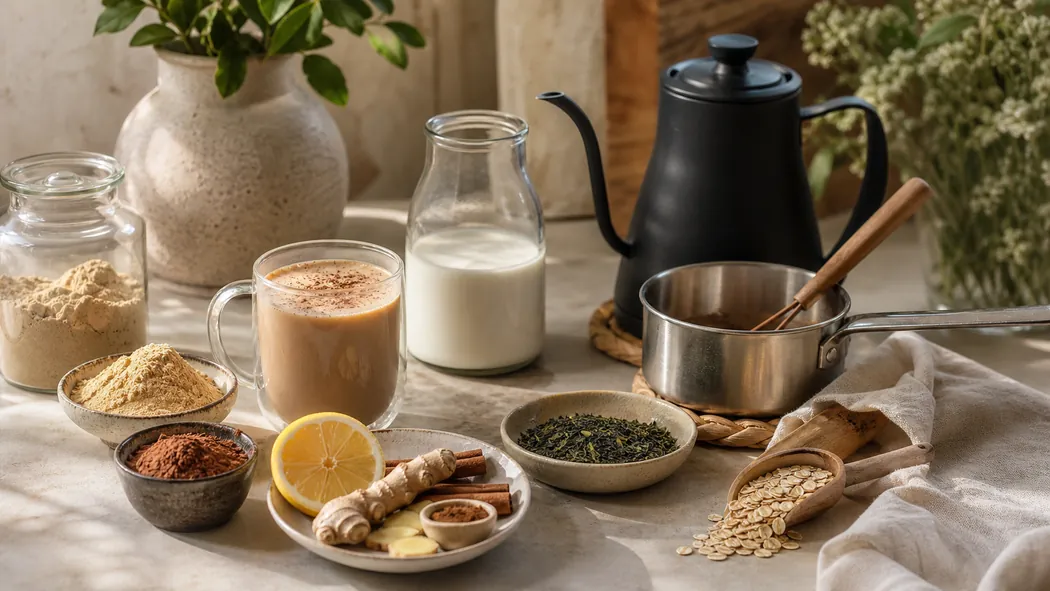
It's midmorning. You've finished your first coffee, but the empty mug is still on your desk and another cup sounds appealing. Before you turn on the coffee maker again, ask what you're actually looking for: more caffeine, the familiar taste of coffee, something warm to hold, or just a pause between tasks?
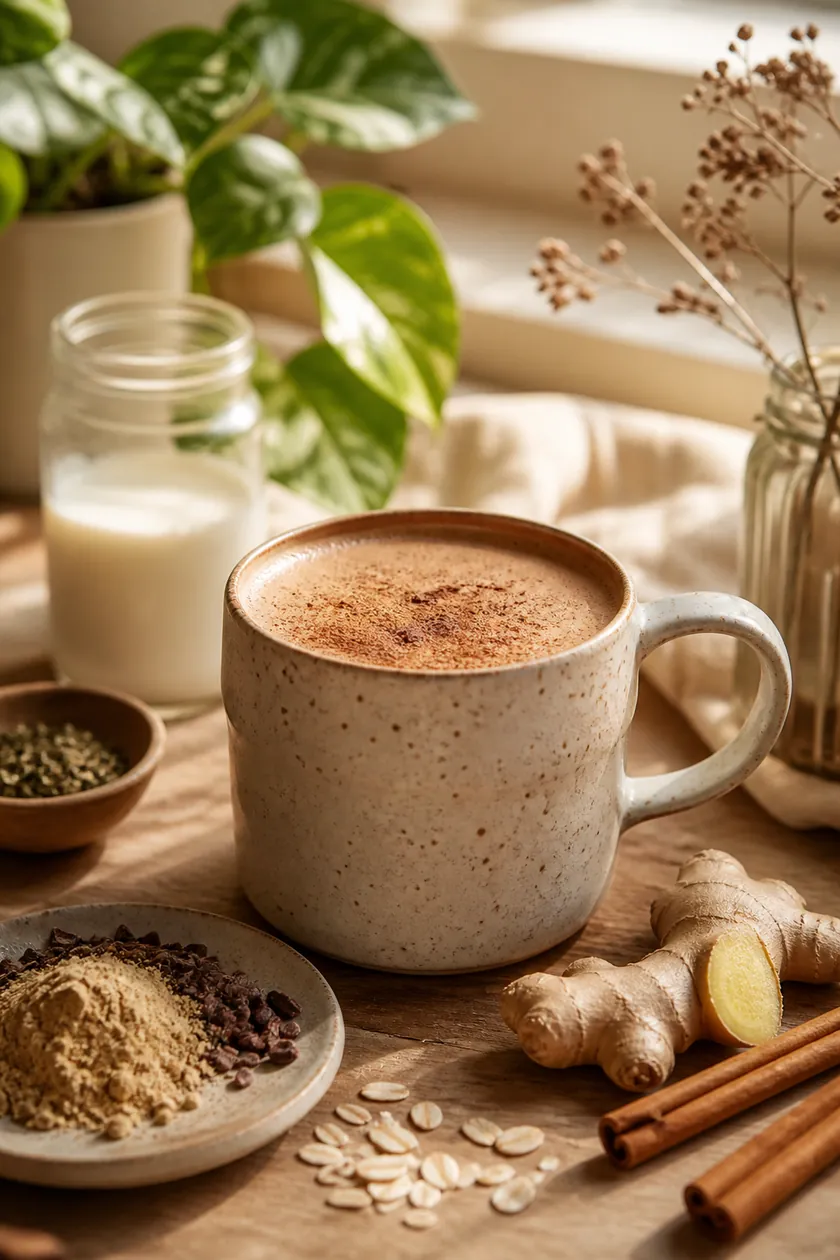
The answer changes which drink makes sense. Decaf coffee keeps the roasted flavor with much less caffeine. Green tea offers some caffeine but usually less than brewed coffee. Plain rooibos, cinnamon oat milk, and fresh ginger tea offer different flavors without relying on caffeine-containing ingredients. None is a proven replacement for caffeine's alerting effect, and there's no need to label coffee itself as bad.
Start With Your Reason for Reaching for Cup Number Two
If it's the flavor, decaf is the closest match. If you want a little caffeine, green tea gives you a different taste and generally a smaller amount. If it's the morning ritual, a warm herbal infusion or spiced milk can fill the mug without pretending to boost concentration. And if you're simply thirsty, water is a perfectly good answer.
The reference amounts below are for 8 fluid ounces (about 237 ml) unless otherwise stated. They're estimates, not guarantees for a specific brand or brewing method.
| Drink | Approximate caffeine | Flavor and texture | Everyday convenience |
|---|---|---|---|
| Regular brewed coffee (for comparison) | About 96 mg in a typical 8-oz serving | Roasted, bitter, familiar | Brew as usual |
| Decaf coffee | FDA: typically 2–15 mg per 8 oz | Closest to regular coffee | Same routine as coffee |
| Brewed green tea | About 29 mg per 8 oz in Mayo Clinic's reference table | Grassy, vegetal, sometimes brisk | Tea bag or loose leaf; follow its directions |
| Plain red rooibos | Naturally caffeine-free | Mellow, slightly fruity | Steep a tea bag or loose leaf as labeled |
| Warm cinnamon oat milk | No caffeine-containing ingredients in the plain version | Creamy, mildly spiced | Warm and stir in one small pan |
| Fresh ginger infusion | No caffeine-containing ingredients in the plain version | Bright, peppery, lighter-bodied | Kettle, slices, and a short timed steep |
Caffeine varies with serving size, plant variety, product, and preparation. Decaf means reduced caffeine, not necessarily zero. Check the packaging if you need to keep track of your intake.
Five Drinks Worth Trying Instead
1. Decaf coffee: keep the coffee ritual
If you still want roasted coffee flavor, decaf is the closest match. Brew it in your usual way, then taste before adding syrups or sweetened creamers. The FDA estimates 2–15 mg caffeine per 8 fl oz in many decaf coffees; the actual amount varies. Decaf is lower caffeine, not zero caffeine.
2. Green tea: choose a smaller, not absent, caffeine contribution
If some caffeine is part of what you want, brewed green tea is an alternative with a different taste. Mayo Clinic's reference table lists about 29 mg per 8 fl oz brewed green tea, compared with approximately 96 mg per 8 fl oz brewed coffee. These are comparison figures, not values for all brands, matcha drinks or bottle sizes. Follow your tea's brewing instructions.
3. Plain rooibos: a tea-style cup with no caffeine-bearing tea leaves
Rooibos is a naturally caffeine-free South African infusion. Its mellow, slightly fruity taste can be satisfying with or without milk, but it will not replicate coffee's stimulant effect. Choose plain rooibos or check a flavored product carefully for black or green tea.
4. Cinnamon oat milk: choose the creamy part of the habit
If the best part of your second coffee is the milk and warmth, try unsweetened oat milk warmed gently with a small amount of culinary cinnamon, mixed first into a spoonful of cool milk. This is a serving idea awaiting testing, not a claim of improved alertness. Check flavored milk for added sugar and caffeine-containing additions.
5. Mild ginger tea: choose a clear, peppery cup
A measured ginger-and-water steep can offer a distinct non-coffee taste with very few ingredients. It does not deliver caffeine's alerting effect; ginger can cause heartburn for some people. Use the separate ginger-tea recipe for the exact proportions and strength controls rather than improvising with concentrated products.
One decision that saves time: coffee flavor → decaf; some caffeine → green tea; no caffeine and a tea-style cup → plain rooibos; creamy ritual → spiced milk; sharper water-based flavor → ginger.
Want Coffee-Like Flavor Without Coffee?
Roasted chicory or grain-based coffee substitutes sometimes appeal to people looking for a darker, toasted drink. But coffee alternative is a product category, not a caffeine guarantee. Some blends include coffee, cacao, sweeteners, or added herbs. Grain-based products may contain barley or rye, which matters if you avoid gluten. Follow the package instructions rather than trying to create your own extraction or substitute an unfamiliar supplement.
If you simply want the closest coffee taste with less caffeine, decaf remains the easiest place to start. If you want no caffeine-containing ingredients, a plainly labeled rooibos or uncomplicated spiced milk is often easier to assess than a proprietary “energy” blend.
Make the Switch Without Turning It Into a Complicated Project
A second morning cup is often a habit, so make the choice manageable rather than announcing a complete overhaul.
- Notice what you miss. Is it roasted flavor, caffeine, warmth, or a small break?
- Pick one next-cup alternative. Choose the matching category from the comparison above. Do not assume herbal powders and “adaptogen” blends are evidence-based stimulant replacements.
- Keep the serving comparable. An 8-fl-oz reference cup is not equivalent to every 16- or 20-fl-oz café order. Check the actual size and product label.
- Reduce caffeine gradually if you're a regular high consumer. Sudden reduction can produce headaches, drowsiness or irritability. It is fine to use decaf as a transitional choice.
- Evaluate taste and convenience separately. A drink can be pleasant even if it does not give the same alertness. If you need a different caffeine plan for medical reasons, seek individualized advice.
The goal is a realistic morning choice, not another rigid ritual.
Keep Caffeine Claims Separate From Flavor Claims
The FDA cites 400 mg of caffeine per day as an amount not generally associated with negative effects for most adults, not a target to reach. Sensitivity varies, and some people should use much less or seek individualized advice. Caffeine can also appear in chocolate, energy products, supplements, and some medications.
A drink with no caffeine is not an alertness treatment. You may like its taste, warmth, or place in your routine, but it shouldn't be advertised as a replacement for sleep or as a scientifically proven way to increase focus. Similarly, maca, “adaptogen” blends, and concentrated botanical extracts should not be casually presented as equivalent substitutes for coffee's stimulant effect.
The best second morning cup might be decaf. It might be green tea, rooibos, warm milk, or water. Choose the job you want the drink to do, then choose the ingredients that actually do that job.
Common Questions
What can I drink instead of a second coffee?
If you want coffee flavor, try decaf. For some caffeine with a different flavor, consider green tea. If you want no caffeine-containing ingredients, plain rooibos, cinnamon oat milk, or ginger tea are possible alternatives. Choose according to taste and personal restrictions.
Does decaf coffee contain caffeine?
Yes. According to FDA, an eight-ounce decaf coffee often contains about 2–15 mg caffeine. The amount varies by product, so decaf is not synonymous with caffeine-free.
Is green tea caffeine-free?
No. Brewed green tea contains caffeine; Mayo Clinic lists about 29 mg per 8-ounce cup as a reference amount. Your actual cup can differ with leaf type and brewing method.
Will rooibos or a maca latte keep me as awake as coffee?
No equivalent stimulant effect has been established. Plain rooibos has no naturally occurring caffeine, and maca should not be advertised as a coffee-equivalent energy booster. These drinks may be enjoyable but do not replace adequate sleep.
Can switching away from coffee give me a headache?
Yes, if you regularly consume caffeine and cut back abruptly. Headache, tiredness, irritability, and poor concentration are recognized withdrawal symptoms. The FDA recommends reducing habitual caffeine intake gradually.
Can I make the second drink without added sugar?
Yes. Choose unsweetened tea or plain milk, and taste before adding honey, flavored syrups, or sweetened creamers. Review packaged products for added sugars on the Nutrition Facts label where provided.
Sources and Further Reading
- U.S. FDA — Spilling the Beans: How Much Caffeine Is Too Much? — Decaf caffeine, variation, 400 mg general reference, sensitive groups, tapering.
- Mayo Clinic — Caffeine Content for Coffee, Tea, Soda and More — Reference 8-oz values for brewed coffee and green tea.
- MedlinePlus — Caffeine — Caffeine effects, individual cautions, and withdrawal symptoms.
- South African Rooibos Council — Frequently Asked Questions — Plain rooibos characteristics and naturally caffeine-free status.
- U.S. FDA — Added Sugars on the Nutrition Facts Label — Interpreting the added-sugars line on packaged drinks.
- CDC — Rethink Your Drink — Checking sweetened coffee and tea drinks for added sugars.