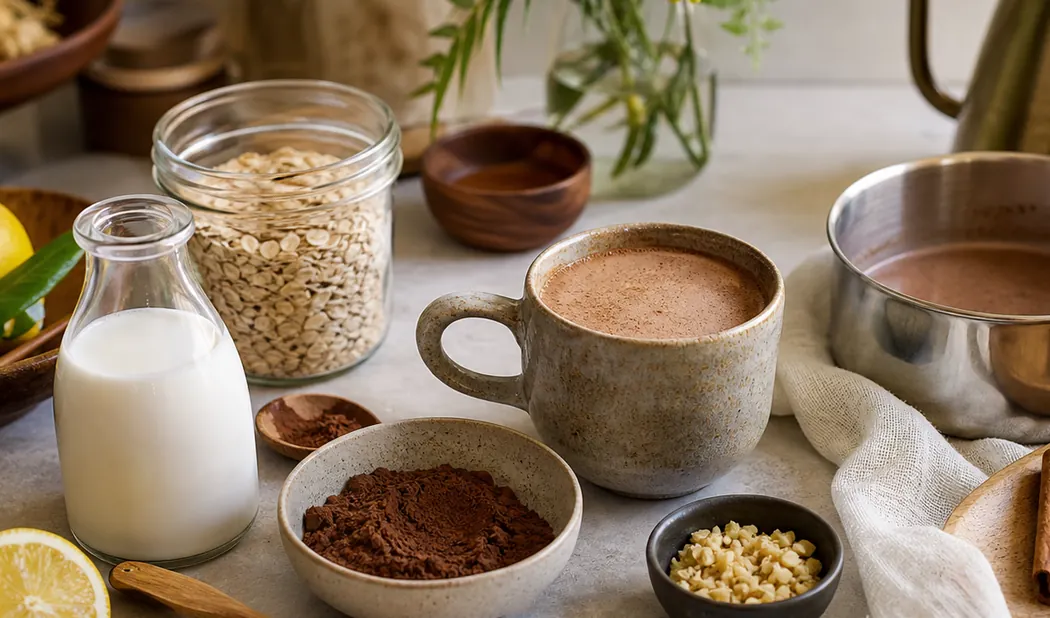
Maca powder can bring an earthy, slightly malty note to a warm milk drink or smoothie. It isn't chocolate, coffee, or a shortcut to more energy. For a drink that actually tastes good, the useful starting questions are simpler: Which maca product do you have? What does it taste like? And how can you combine it with other ingredients without a chalky finish?
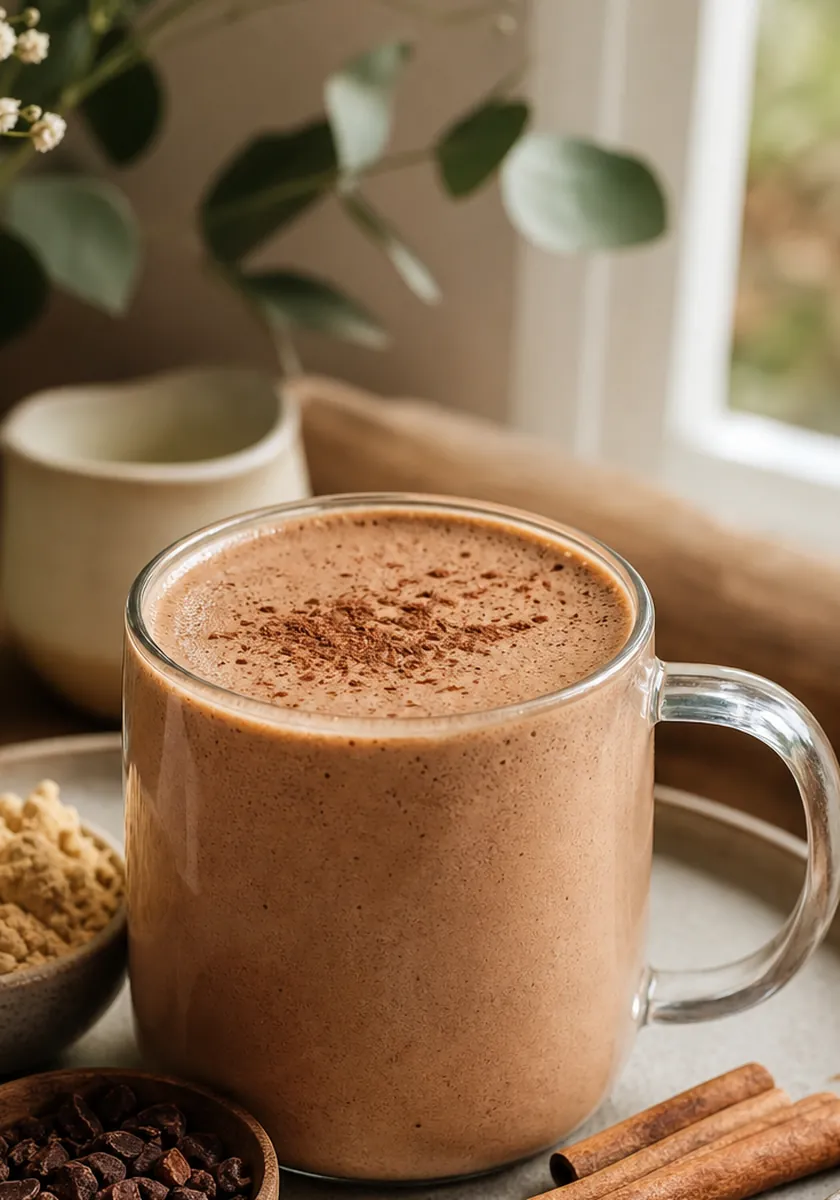
This guide compares ordinary maca powders, explains what gelatinized means on a package, and looks at how maca differs from cacao. It focuses on ingredients and kitchen technique, not supplement dosing or promises about hormones, stamina, or fertility.
What Is Maca?
Maca (Lepidium meyenii) is a plant in the cabbage family grown in the high Andes of Peru. Its enlarged underground hypocotyl-root structure has a long history as a local food. Traditionally prepared maca has been cooked or dried and incorporated into foods and drinks; today's packaged powders and extracts represent a variety of different processing methods.
You will often see the convenient phrase maca root powder on a package. For shopping purposes, that is familiar wording, even though descriptions of the edible plant part can be more precise. What matters most at home is knowing whether the actual product is a culinary powder, a processed food ingredient, or a concentrated supplement.
What Does Maca Taste Like in a Drink?
Maca is often described as earthy, malty, nutty, or slightly caramel-like. It does not give milk the recognizable chocolate flavor of cacao, and it is not as aromatic as cinnamon or vanilla. The impression can vary considerably by product, processing, freshness, and what else is in the cup. These are general culinary descriptions, not tasting results from our kitchen.
A little cinnamon or vanilla can make maca's earthy flavor feel more familiar; unsweetened oat milk gives it a creamy background. Chocolate creates a different direction: it can cover some of maca's flavor, but it also introduces cacao's bitterness and naturally occurring stimulant compounds. If the drink tastes dusty, changing the powder or how you mix it is often more useful than adding another spoonful of sweetener.
Raw, Gelatinized, and Extract: What Do the Labels Mean?
| Label term | What it usually means | What it does not tell you |
|---|---|---|
| Raw maca powder | Dried, milled maca marketed without the starch-gelatinization process; actual drying and treatment can differ | That the powder was never heated, or that it's suitable to use uncooked without checking directions |
| Gelatinized maca powder | Maca processed with moisture and heat (sometimes pressure) to change the starch structure | That animal gelatin was added, or that the powder has proven superior health effects |
| Red, yellow, or black maca | Descriptions of the color of the harvested plant material or marketed varieties | A reliable guarantee of a specific flavor, concentration, or medical outcome |
| Maca extract / capsules / blend | A supplement-style product that may use extraction or contain additional ingredients | That it can be substituted for a food recipe's maca powder by matching teaspoons |
Gelatinization is a starch-processing term. Despite the similar word, it does not itself mean that animal-derived gelatin was added; always check the actual ingredient list and processing information. Still, check the full ingredients and allergen information rather than assuming every brand has the same formulation.
Processing may change how a powder behaves in a drink, but products are not standardized around a single kitchen performance. Don't assume raw means better, gelatinized means guaranteed easy digestion, or one maca color has a demonstrated hormone-related benefit. Read the manufacturer's preparation instructions for the product you actually purchased.
Maca vs. Cacao: They Do Different Jobs
The original articles compared maca and cacao in a latte. That's useful as a flavor and product-choice comparison, not a reason to publish another overlapping drink recipe.
| Maca powder | Unsweetened cacao / cocoa powder | |
|---|---|---|
| Main ingredient | Processed maca plant material | Processed cacao beans |
| Typical flavor | Earthy, malty, mildly nutty | Chocolatey, roasted, sometimes bitter |
| Caffeine | Plain maca is not a natural caffeine ingredient; check blended products | Cocoa naturally contains some caffeine and theobromine |
| Kitchen role | Adds an earthy flavor note; may leave sediment | Builds chocolate flavor; may also clump or settle |
| Can one replace the other? | No direct flavor or quantity substitution | No direct flavor or quantity substitution |
Choose maca if you want to explore its particular earthy flavor and have a product that is appropriate for food preparation. Choose cocoa for unmistakable chocolate flavor. Combining the two is a flavor option, not evidence that the resulting drink will provide more energy or other health benefits. People avoiding caffeine should remember that adding cacao changes the drink's caffeine profile.
How to Use Food-Labeled Maca in Warm and Cold Drinks
Start with the actual label and a recipe designed for your product form. This section describes mixing technique, not a recommended maca serving or daily intake.
- Check the product first. Confirm that the powder is specifically sold for use in food or beverages, see whether it is raw or heat-processed, and follow any instructions about cooking, serving amount, or cautions. Do not invent an amount for an extract or supplement.
- Make a small paste for a warm drink. Measure the amount specified by the chosen food recipe and stir it into a tablespoon or two of cool milk. Whisk until the visible dry clumps disappear, then slowly add the remaining milk.
- Warm gently if the recipe calls for it. Stir often so the milk doesn't catch on the bottom of the pan. Heating a drink isn't a substitute for any required product-specific processing instructions.
- For a cold drink, blend or whisk thoroughly. A smoothie with milk and banana can help carry the powder's texture, but it won't make an unsuitable product safe. Check whether the maca powder you bought is intended for cold preparation.
- Taste before sweetening. A little sediment is normal with plant powders. If you dislike the flavor, choose a smaller amount in a future recipe within the label directions instead of masking an overly strong mixture with extra syrup.
For a complete, measured kitchen recipe, see Maca Cinnamon Morning Latte. For general clump-control techniques that also apply to cocoa, cinnamon, and turmeric, see How to Use Herbal Powders in Drinks. Those pages serve different needs from this ingredient guide.
Three Pairings Worth Considering
Maca + cinnamon + oat milk: Cinnamon and vanilla provide the familiar flavor framework of a warm spiced latte. The maca contributes a more earthy note. Use the specific amounts in the latte recipe rather than creating an improvised supplement serving.
Maca + cacao + milk: Cacao supplies the dominant chocolate flavor; the maca may add a malty background. Because cocoa contains caffeine, this option is different from a plain maca-and-cinnamon drink. Unsweetened cocoa may also need more mixing to prevent lumps.
Maca + banana + a suitable milk: A blended banana drink is a simple flavor pairing for a food-grade maca product whose directions permit cold preparation. Banana changes the sweetness and texture; it does not alter the ingredient's medical safety considerations.
These are serving ideas, not three additional tested recipes. The exact maca product, label, and reader's circumstances still determine whether including it is appropriate.
Compare Two Example Packages Before You Choose
| Fictional front-label wording | What the back label would need to clarify | Reasonable next step |
|---|---|---|
| “Plain maca root powder — food ingredient” | Full ingredients, whether heating is required, preparation instructions, and warnings | Follow the actual food-use directions; choose a measured culinary recipe |
| “Maca extract complex — standardized blend” | Supplement Facts or equivalent full details, named ingredients, extraction/standardization information and cautions | Do not substitute it for food powder in a latte recipe or estimate an equivalent teaspoon |
These are deliberately fictional educational examples—not real products, verified labels, or a statement that either form is suitable for everyone.
Five Label Checks Before Buying Maca Powder
- Ingredient identity: Does it actually say maca, and does it identify the plant material or part? Be skeptical of vague "superfood" mixtures.
- Product form and processing: Is it ordinary food powder, gelatinized maca, an extract, or a proprietary supplement blend? The name on the front may not tell the full story.
- Full ingredient list: Check for cacao, coffee, sweeteners, flavorings, caffeine sources, or added botanicals that change the drink's profile.
- Directions and warnings: Follow the product's stated preparation and serving instructions. A food recipe is not permission to use a concentrated supplement instead.
- Facts panel and seller details: U.S. dietary supplements use Supplement Facts; conventional packaged foods generally use Nutrition Facts, subject to labeling rules and exemptions. These panels help identify what you're buying, but neither is an FDA endorsement of a health claim.
Store dry powder sealed in a cool, dry place following its label, with a dry spoon to reduce moisture and clumping. For prepared milk-based drinks, follow normal refrigeration and the milk manufacturer's instructions; don't apply the dry powder's shelf life to a finished latte.
What About Energy, Hormones, and Other Health Claims?
Maca is often marketed using words such as energy, adaptogen, hormone balance, and fertility. Those marketing claims should not be mistaken for evidence that a scoop in oat milk produces a clinical effect. Memorial Sloan Kettering notes that human trials are few and often small, and that evidence for several widely promoted benefits is limited or mixed. The materials and doses studied are not interchangeable with an ordinary homemade drink.
A mug may be enjoyable as part of your morning routine because of its flavor and warmth. That is a straightforward description of the experience—not a claim that maca replaces caffeine, corrects a health problem, or changes hormone levels. The most useful decision is still to choose a suitable product, read the full label, and make a drink you genuinely like.
Common Questions
What does maca taste like in a latte?
Maca is often described as earthy, malty, or slightly nutty, though products differ. Cinnamon, vanilla, or cocoa can change the overall flavor. Those are common descriptions, not our own tested tasting notes.
Is maca powder the same as cacao powder?
No. They come from different plants and taste different. Plain maca is not a caffeine ingredient, while cocoa naturally contains some caffeine and theobromine. Neither should replace the other by the spoonful.
What is gelatinized maca powder?
It is maca processed using heat and moisture to change the starch structure, sometimes with pressure. The word refers to starch gelatinization, not automatically added animal gelatin. Check each brand’s full ingredient list and use directions.
Can I add raw maca powder to a cold smoothie?
Only if the particular food product’s directions support that preparation and it is appropriate for you. “Raw” is not a universal processing or safety standard, so check the label instead of assuming any raw maca can be consumed uncooked.
Can I replace maca powder with capsules or maca extract?
No. Capsules, standardized extracts, and blends may differ in ingredients, concentration, and directions. Do not convert a culinary recipe to a supplement dose using teaspoons.
Will drinking maca every morning improve my energy or hormones?
A homemade drink has not been shown to provide those outcomes. Human research on maca is limited and often uses specific preparations. This article is for flavor and product understanding, not medical or daily-dose advice.
Sources and Further Reading
- Memorial Sloan Kettering Cancer Center — Maca — Identity, traditional use, evidence limitations, pregnancy/breastfeeding precautions, hormone-sensitive conditions, testosterone test concerns.
- Minich et al. — Not All Maca Is Created Equal (2024) — Product forms, color categories and why gelatinization/processing differences cannot be ignored.
- Gonzales — Ethnobiology and Ethnopharmacology of Maca (2012) — Maca origins and traditional Andean food practices; older literature with limitations.
- U.S. FDA — Dietary Supplement Labeling Guide, Chapter IV — Supplement Facts, botanical ingredient declarations, serving sizes, extract and blend labeling.
- U.S. FDA — FDA 101: Dietary Supplements — Product risk considerations; supplements are not preapproved by FDA for safety and effectiveness.
- FDA — Spilling the Beans: How Much Caffeine Is Too Much? — Consumer caution about caffeine sources and product-dependent caffeine content; no quantitative cocoa table asserted.