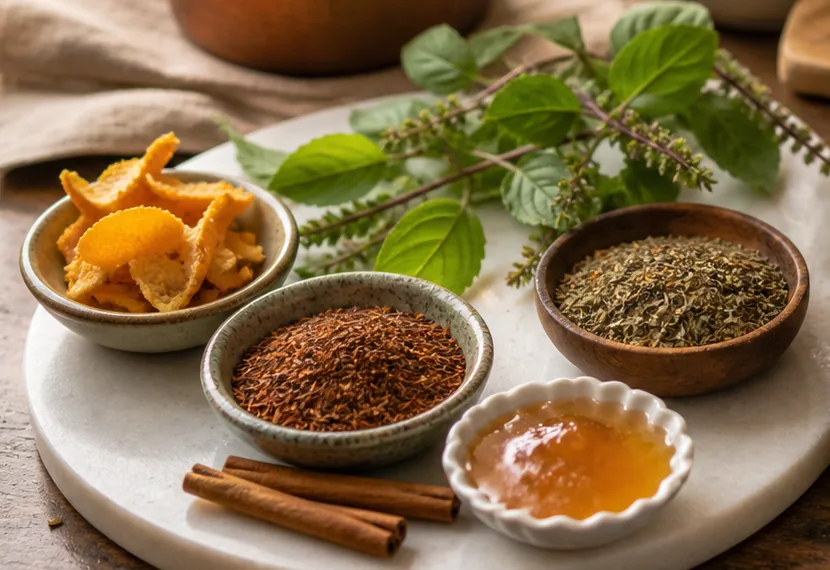
This proposed rooibos-and-tulsi blend brings together two herbs often sold for steeping, but it is not a general recommendation to drink tulsi. Check the safety notice before attempting the optional tulsi version. Rooibos gives the cup a reddish-amber color and a mellow base; tulsi adds a more herbal, slightly peppery aroma. A strip of orange peel and a small piece of cinnamon are optional, but they make the drink feel a little more special without turning it into a sweet dessert tea.
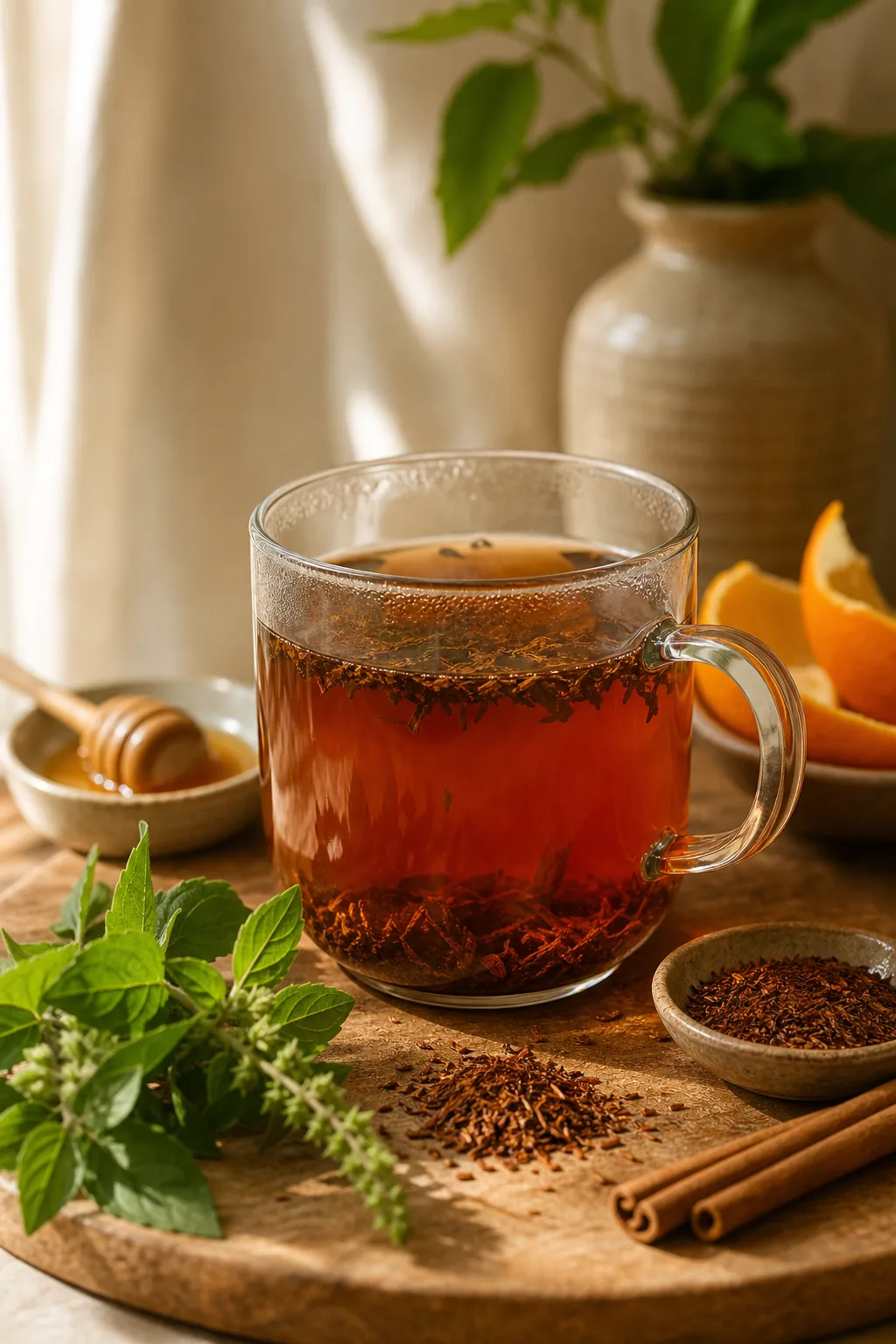
This is an evening-friendly choice because the specified plain herbs contain no caffeine—not because tulsi has been shown to treat insomnia or anxiety. Choose loose-leaf ingredients sold for brewing, and read their labels before using them.
Read before brewing: Tulsi is not appropriate for everyone. People who are pregnant, breastfeeding, trying to conceive, have hypothyroidism or type 2 diabetes, have surgery planned, or take certain blood-thinning, blood-sugar-lowering or thyroid medicines should not assume it is suitable. Read the complete Safety Note before ingredients or steps; a weaker steep is not proof of safety. The precise safety of this untested infusion has not been established.
At a glance: 3 minutes prep · 7 minutes steeping · about 10 minutes total · 1 generous mug
Tulsi Rooibos Tea Recipe
This first version keeps rooibos as the main ingredient, with a smaller amount of tulsi so its herbal character does not take over. The proportions and flavor descriptions are editorial starting points awaiting a kitchen test, not proven doses or a guarantee that every product will brew the same way.
Makes: 1 mug, using 1¼ cups (300 ml) water
Equipment: kettle, covered teapot or heat-safe mug, fine tea infuser or strainer
Ingredients
- 1¼ cups (300 ml) water
- 1 teaspoon plain loose-leaf red rooibos, labeled for tea brewing
- ½ teaspoon dried tulsi (holy basil) leaves, only after verifying the tea-grade label and completing the suitability/safety checks above; do not use extracts or essential oils
- 1 narrow strip orange peel (about 2 inches / 5 cm long), optional; cut from a washed orange without much white pith
- 1 small piece cinnamon stick (about 1 inch / 2.5 cm), optional
- 1 teaspoon honey, optional, added after tasting
Instructions
- Boil the water. Heat 300 ml fresh water in a kettle. If using fresh orange peel, wash the orange under running water and cut one narrow strip with a vegetable peeler.
- Fill the infuser. Add the rooibos and tulsi to a roomy tea infuser or teapot. Add the orange peel and cinnamon stick if using. Do not add honey yet.
- Steep, covered. Pour the freshly boiled water over the ingredients. Cover and steep for 7 minutes off the heat. Follow any product-specific brewing instructions if they differ; blends can vary.
- Strain and taste. Remove the infuser or strain into a heat-safe mug so the herbs do not continue steeping. Taste after the tea cools enough to sip. Stir in honey only if you want a sweeter finish.
Rooibos-Only Option If Tulsi Is Not Appropriate
Omit the tulsi entirely and use plain red rooibos tea labeled for brewing, following its own package directions for amount, temperature, and steeping time. Orange peel and a cinnamon stick may be added for aroma if these familiar food ingredients suit you. This is a different drink, not a claim that reducing tulsi to a smaller amount makes the tulsi recipe safe.
What the Two Herbs Bring to the Cup
Red rooibos is a South African herbal infusion, not black or green tea. Its naturally reddish color and mellow, slightly fruity flavor make it a useful base for this blend. Use plain red rooibos rather than a flavored mixture so you know what is going into the mug.
Tulsi, also called holy basil, is different from the sweet basil used for pesto. Its taste can be more peppery or clove-like, depending on the leaves and the product. Using less tulsi than rooibos is a flavor choice for this particular recipe—not an established safety threshold.
Adjust the Blend Without Making It Complicated
If you prefer a lighter herb flavor, steep for 5 minutes next time and taste before increasing the time. For a more rooibos-forward cup, use 1½ teaspoons rooibos while keeping the other ingredients the same. If the tulsi taste seems too pronounced, try ¼ teaspoon instead of ½ teaspoon in a future batch.
For a brighter aroma, include the orange peel. Avoid thick white pith, which can introduce bitterness. For a warmer spice note, use the cinnamon stick; skip it if you want to notice the herbs on their own. Taste before adding honey, since rooibos can seem naturally gentle without much sweetness.
Flavor adjustments do not remove tulsi's safety considerations. If tulsi isn't appropriate for you, make a rooibos-only orange-and-cinnamon tea instead of trying to find a supposedly safe smaller tulsi dose.
Can I Use Tea Bags Instead?
Yes, but check the label rather than converting a teabag into an assumed teaspoon amount. A plain rooibos bag may be an easy starting point. Tulsi bags and premixed blends vary by manufacturer, and some products contain other herbs or concentrated ingredients. Use a product intended for drinking as tea, follow its directions, and check whether other tea leaves or added ingredients change the caffeine or safety profile.
Make It Iced or Save It for Later
This infusion can be served chilled. Brew and strain it as directed, transfer it to a clean covered container, and refrigerate promptly. Pour over ice after it is cold; give it a stir first if any fine particles have settled.
For the best flavor, make only what you plan to drink. If you prepare extra, refrigerate within 2 hours at 40°F (4°C) or colder and aim to use it by the next day for quality. This next-day suggestion is not a formal maximum safe-storage period. Do not leave a finished infusion on the counter overnight.
Recipe card
Tulsi Rooibos Evening Infusion
Ingredients
- 1¼ cups (300 ml) water
- 1 teaspoon plain loose-leaf red rooibos tea
- ½ teaspoon plain dried tulsi (holy basil) leaves for brewing tea
- 1 narrow strip of orange peel, approximately 2 in (5 cm), optional
- 1 small piece cinnamon stick, approximately 1 in (2.5 cm), optional
- 1 teaspoon honey, optional, to taste
Method
- Heat 300 ml water in a kettle. Wash the orange and cut a narrow strip of peel if using.
- Put rooibos and tulsi in a roomy infuser or teapot; add optional orange peel and cinnamon stick.
- Pour freshly boiled water over the herbs. Cover and steep off the heat for 7 minutes, unless the product label directs otherwise.
- Remove infuser or strain into a heat-safe mug. Cool to a comfortable drinking temperature, taste, and add optional honey only if desired.
Common Questions
Does tulsi rooibos tea contain caffeine?
The recipe uses plain rooibos and tulsi leaves, without coffee or caffeine-containing tea leaves. Check packaged blends: added black tea, green tea, or other ingredients can change that.
Is tulsi the same as the basil in my kitchen?
No. Tulsi is holy basil (Ocimum tenuiflorum), not the usual sweet basil used in pesto. Use a tulsi product specifically labeled for brewing tea rather than substituting an unidentified fresh herb.
Can I leave the herbs in the mug longer?
You can adjust steep time for flavor, but seven minutes gives this proposed blend a defined stopping point. Remove the herbs before drinking if you want the flavor to stay relatively consistent.
Can I make this without tulsi?
Yes. Brew plain red rooibos with optional orange peel and cinnamon, following the rooibos product directions. That makes a different blend but may be a better choice when tulsi is not appropriate.
Sources and Further Reading
- Merck Manual — Holy Basil (Consumer Version) — Risks, pregnancy and breastfeeding, thyroid and diabetes cautions, surgery and medication interactions
- Memorial Sloan Kettering — Holy Basil — Botanical identification, limitations of clinical evidence and reported side effects
- South African Rooibos Council — Rooibos Is More Than Just a Drink — Baseline red rooibos leaf amounts and infusion time; flavor customs
- South African Rooibos Council — Frequently Asked Questions — Rooibos composition, naturally caffeine-free character and distinction from tea leaves
- FoodSafety.gov — 4 Steps to Food Safety — Food-safe refrigeration temperatures and prompt cooling